Desk Lamp vs Table Lamp: The Difference
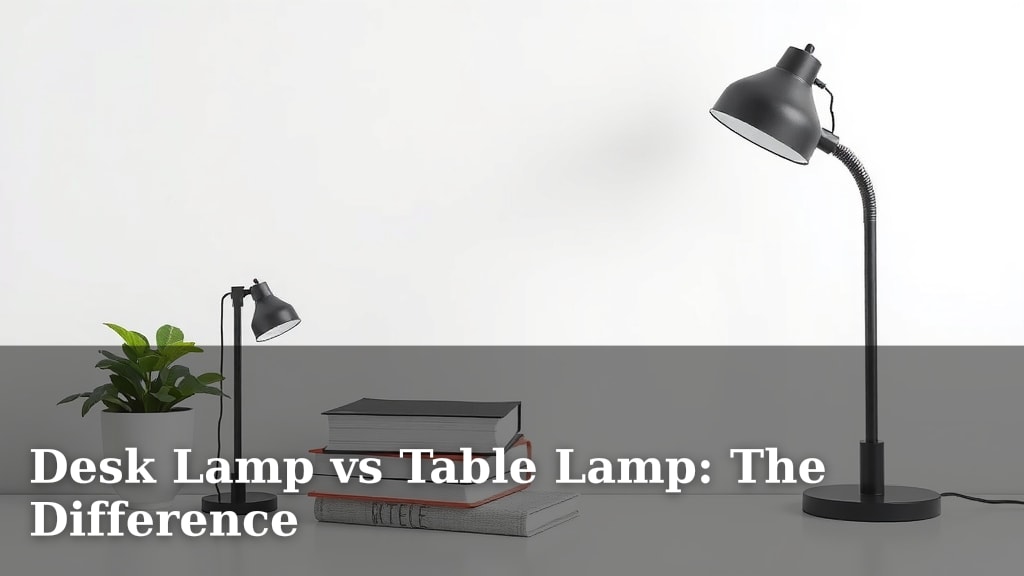
While both desk lamps and table lamps provide light, a desk lamp is specifically designed for task lighting on a smaller surface, like a desk. A table lamp is generally larger and meant for ambient lighting on tables, nightstands, or side tables. The core difference lies in their intended use and size.
Think of a desk lamp as your focused work buddy, perfect for reading or intricate tasks. A table lamp, on the other hand, is more like a gentle mood setter for a room. We found that many people use the terms interchangeably, but understanding their distinct roles can help you choose the right light for your needs. Your workspace will thank you for the focused glow!
- Desk lamps are for task lighting on small surfaces.
- Table lamps offer ambient lighting for rooms.
- Size and design often differ significantly.
- Choosing the right lamp improves your space.
Let’s break down the key differences and help you find the perfect lamp for your home.
Desk Lamp vs. Table Lamp: What’s the Real Difference?
You might be wondering if there’s a big fuss about calling a lamp a desk lamp or a table lamp. We get it! The terms often get tossed around interchangeably. But honestly, there are some **key distinctions** that can really impact how well your lighting works for you. Let’s clear up the confusion so you can make the best choice for your space and your needs. It’s not just about style; it’s about function!
Understanding the Core Purpose: Task vs. Ambient Light
The biggest difference boils down to what the lamp is designed to do. Think about where you plan to put it and what you’ll be doing nearby.
Desk Lamps: Your Focused Work Companion
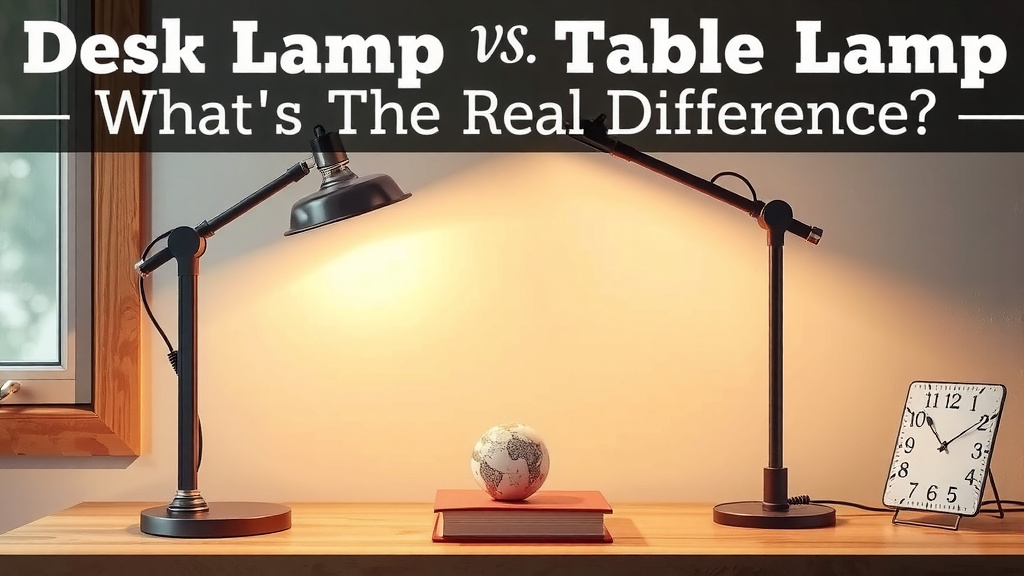
A desk lamp is built for task lighting. Its primary job is to provide a concentrated beam of light directly where you need it. This is perfect for activities that require close attention, like reading, writing, or working on crafts. You want a lamp that illuminates your immediate workspace without causing glare or straining your eyes. Many desk lamps are designed to be adjustable, allowing you to aim the light precisely. This focused illumination is why they’re often found on home office desks or crafting tables.
Table Lamps: Setting the Mood and Ambiance
Table lamps, on the other hand, are usually all about ambient lighting. Their goal is to cast a softer, more diffused glow across a larger area of the room. They don’t aim for pinpoint accuracy like desk lamps. Instead, they contribute to the overall atmosphere, making a room feel cozy and inviting. You’ll commonly see table lamps on nightstands, living room side tables, or console tables. They help reduce harsh shadows and create a warm, welcoming environment.
Size and Design Matters: A Visual Comparison
Beyond their purpose, desk lamps and table lamps typically have noticeable differences in their physical characteristics.
Desk Lamps: Compact and Functional
Desk lamps are generally smaller and more compact. This is so they don’t take up too much precious real estate on your desk. They often feature articulated arms or flexible necks. This allows you to easily adjust the height and angle of the light. Many have a smaller base to fit comfortably on a desk alongside your computer, books, or other work essentials. Think of them as nimble assistants, ready to bend and stretch to help you out.
Table Lamps: Larger and Decorative
Table lamps tend to be larger and more substantial. They are designed to be a decorative element in a room as much as a light source. You’ll find a wide variety of styles, from modern and minimalist to classic and ornate. Their shades are often wider and designed to diffuse light broadly. The bases can be more decorative, serving as a stylish accent piece. Because they’re not confined to a small workspace, they have more freedom to be visually interesting.
Adjustability and Light Direction: Key Features
How you can manipulate the light output is another significant differentiator.
The Articulation of Desk Lamps
Most desk lamps boast adjustable features. This might include swing arms, goosenecks, or pivoting heads. This level of control is essential for task lighting. You need to direct the light precisely where your hands are working or where you’re reading. Without this adjustability, you might end up with awkward shadows or strain your eyes trying to see. We found that lamps with multiple points of adjustment offer the most flexibility.
The Static Nature of Table Lamps
Table lamps typically have a more fixed design. While you can often adjust the angle of the lampshade slightly, their primary light direction is generally set. Their purpose is to cast light outwards and upwards, bathing the surrounding area in a soft glow. You won’t usually find the complex joint systems you see on desk lamps. Their design prioritizes broad, diffused illumination over precise targeting.
Choosing the Right Lamp for Your Needs: A Quick Guide
Now that you know the differences, how do you decide which one is right for you? It really comes down to where you’ll use it and what you’ll be doing.
When to Choose a Desk Lamp
Opt for a desk lamp if you need focused light for specific tasks. This includes:
- Your home office for work or study.
- A crafting or hobby station.
- A reading nook where you need direct light.
- Any area where you perform detailed work.
- A small bedside table for reading before sleep.
When to Choose a Table Lamp
A table lamp is your best bet for general room illumination and creating atmosphere. Consider it for:
- Living room side tables to complement overhead lighting.
- Nightstands for a softer glow than a direct reading light.
- Entryway consoles to welcome guests with warm light.
- Bedrooms for a cozy ambiance.
- Anywhere you want to add a decorative touch and gentle light.
Material and Style Considerations
While function is primary, style plays a role too. Desk lamps often come in metal finishes like chrome, black, or brushed nickel, reflecting their utilitarian design. Table lamps, however, offer a broader range of materials, including ceramic, wood, fabric, and glass. Their shades can be plain or patterned, adding to their decorative appeal. We found that both types can be stylish, but table lamps have a wider spectrum of aesthetic choices.
The Bottom Line: Function Dictates Form
In essence, the primary difference between a desk lamp and a table lamp lies in their intended purpose and design. One is for focused work (desk lamp), and the other is for broader ambiance (table lamp). By understanding these distinctions, you can outfit your home with the right lighting to suit every need, from deep work sessions to relaxing evenings.
| Feature | Desk Lamp | Table Lamp |
|---|---|---|
| Primary Use | Task Lighting (focused light) | Ambient Lighting (general room light) |
| Size | Generally smaller, more compact | Typically larger, more substantial |
| Adjustability | High (articulated arms, flexible necks) | Low (usually fixed position) |
| Light Direction | Directed, focused beam | Diffused, broad glow |
| Typical Placement | Desks, work surfaces, craft tables | Nightstands, side tables, console tables |
Your Checklist for Choosing the Right Lamp
To make sure you pick the perfect lamp, keep these points in mind:
- What specific task will the lamp assist with?
- Where will the lamp be placed?
- Do you need focused light or general illumination?
- How much space do you have?
- What is the overall style of the room?
- Does the lamp need to be adjustable?
Conclusion
You now understand that desk lamps and table lamps serve distinct purposes. Desk lamps are your go-to for focused task lighting on work surfaces. Table lamps excel at providing soft, ambient light to enhance a room’s atmosphere. Remember their differences in size, adjustability, and design. By considering what you need the light for and where it will go, you can confidently choose the perfect lamp. Start by looking at your workspace or living area and deciding if you need a focused beam or a gentle glow.
Frequently Asked Questions
Can I use a table lamp as a desk lamp?
While you could technically place a table lamp on your desk, it’s generally not ideal. Table lamps are designed for ambient light, meaning their light is diffused and spreads out. This can be too dim for focused tasks and may not offer the directed beam needed to prevent eye strain while working or reading.
Can I use a desk lamp for general room lighting?
You can, but it might not be the most effective choice for ambient lighting. Desk lamps provide a concentrated beam. Using one for general room lighting might create harsh shadows or only illuminate a small area, leaving the rest of the room dim and lacking coziness. Table lamps are better suited for broader, softer illumination.
Are desk lamps always smaller than table lamps?
Generally, yes. Desk lamps are designed to fit comfortably on a desk without taking up too much space. Table lamps are often larger to serve as decorative elements and to cast light over a wider area. However, there can be exceptions depending on specific designs and styles.
What is the best type of lamp for reading in bed?
For reading in bed, a desk lamp is often the better choice. Many desk lamps have adjustable arms and heads, allowing you to direct the light precisely onto your book without disturbing a partner. While a small table lamp could work, its light might be too diffuse or positioned awkwardly for comfortable reading.
Do the materials or styles of lamps affect their function?
Material and style primarily influence a lamp’s aesthetic and how it diffuses light. For example, a metal shade on a desk lamp might reflect light more directly, while a fabric shade on a table lamp will soften and spread the light more widely. Function is primarily determined by design (e.g., adjustability, shade shape), but style can subtly impact the quality of light produced.

![10 Best Desk Lamp For Dark Office [2026]](https://bestdesklamp.com/wp-content/uploads/2026/09/10-best-desk-lamp-for-dark-office-2026-featured-768x432.jpg)