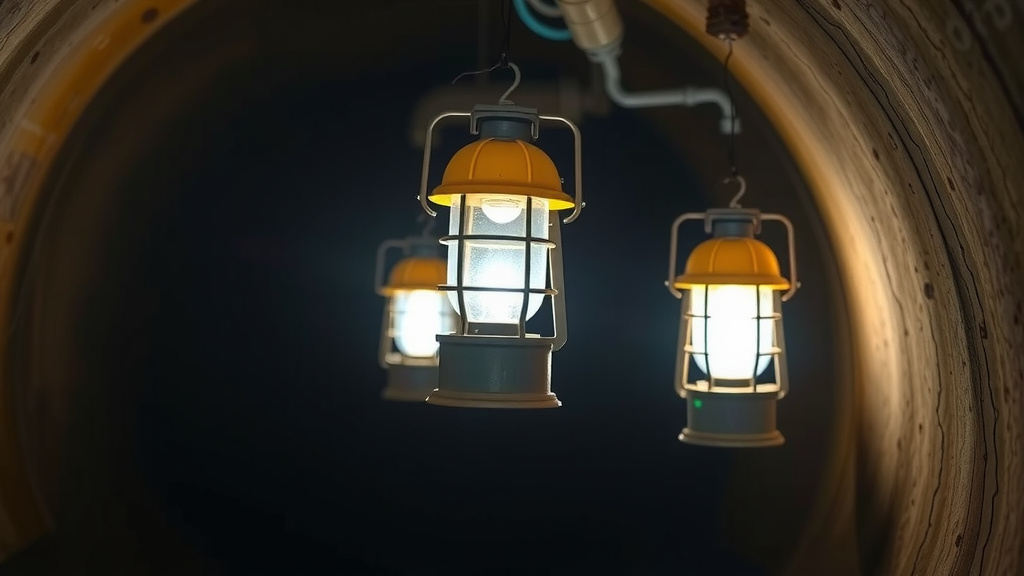
How Miner’s Lamps Work: Illuminating Safety Underground
Miner lamps work by providing a safe and reliable light source in dangerous underground environments. Early lamps used an open flame, which was hazardous due to explosive gases like methane, often called “firedamp.” Modern lamps, however, are designed with safety features to prevent igniting these gases.
These lamps are essential for visibility, helping miners navigate tunnels and avoid hazards. They have evolved significantly over time, from simple oil lamps to advanced LED battery-powered units. This evolution has dramatically improved miner safety and productivity underground.
- Miner lamps provide light in dark, dangerous mines.
- Early lamps used open flames, which were risky.
- Modern lamps use safer designs to prevent explosions.
- They help miners see and avoid underground hazards.
- Technology has made them much safer and more efficient.
Let’s walk through exactly how these essential tools keep miners safe and seen, from their history to the technology they use today.
Understanding How Miners’ Lamps Work Safely
Miner lamps are pretty amazing pieces of equipment. They’re designed to provide light where there is none. More importantly, they do it without causing dangerous explosions. This is a big deal deep underground. Methane gas is often present. It’s highly flammable. A stray spark can be catastrophic.
A Look Back: Early Lighting Methods
Imagine working in total darkness. That was the reality for miners for a long time. They relied on open flames for light. Candles and simple oil lamps were common. These were incredibly risky. The slightest whiff of methane could ignite. Many accidents happened this way. It was a constant danger.
The Open Flame Hazard
These early lamps were essentially a controlled fire. They burned oil or fat. This produced a small flame. While it gave off light, it also emitted heat. If methane gas concentrations were high enough, the flame could act as an ignition source. This led to terrible explosions. The risk was enormous.
The Introduction of the Davy Lamp
A huge step forward came with Sir Humphry Davy. He invented a safety lamp in 1815. His research led to a clever design. It used a fine metal mesh. This mesh surrounds the flame. It prevents the flame from escaping. It stops the flame from igniting the surrounding air. Many guidelines point to this as a major safety advancement (National Science Foundation).
Modern Miner Lamp Technology
Today’s miner lamps are far more advanced. They no longer rely on open flames. Most use electricity. This significantly reduces the risk of ignition. They are built to be robust. They must withstand tough underground conditions. The focus is on reliable light and safety.
Battery-Powered LED Lamps
The most common type today is a battery-powered LED lamp. These are usually mounted on a miner’s helmet. An LED is a Light Emitting Diode. They are very efficient. They produce a bright light. They also consume less power than older bulbs. This means longer battery life.
The power source is typically a rechargeable battery pack. These are often lithium-ion. They are designed to be sealed. This prevents sparks from escaping. The lamp unit itself is also sealed. It’s built to be explosion-proof. This means it won’t ignite flammable gases. This is the core safety feature.
How LEDs Enhance Safety
LEDs produce very little heat compared to incandescent bulbs. This is another safety advantage. Overheating is a concern in mines. Cooler operating temperatures reduce the risk of ignition. They also tend to be very durable. They can handle bumps and drops.
The Importance of Explosion-Proof Design
This is the most critical aspect of a miner’s lamp. Mines can contain explosive gases like methane. These gases are invisible. They have no smell. Miners need to be able to work safely around them. Explosion-proof design is key.
Sealed Components and Intrinsic Safety
Miner lamps are designed with something called “intrinsic safety.” This means the electrical components are designed to operate at very low power levels. Even if a spark were to occur internally, it wouldn’t have enough energy to ignite the surrounding atmosphere. We found that this concept is central to modern mine safety (Mine Safety and Health Administration).
The casings of these lamps are made from sturdy materials. They are sealed tightly. This prevents any internal sparks or hot surfaces from coming into contact with the outside air. Think of it like a well-sealed container. Nothing dangerous can get in or out.
Key Features of Modern Miner Lamps
Beyond basic lighting, modern lamps have several important features. These make them more effective and safer tools for miners. They help miners do their jobs better and stay out of harm’s way.
Brightness and Beam Control
Mines are not just dark; they can be vast. Miners need to see clearly. Modern lamps offer adjustable brightness. Many also have beam focus controls. This allows miners to direct light where it’s needed most. They can light up a work area or see a long distance down a tunnel.
Durability and Reliability
These lamps must be tough. They get knocked around. They can be dropped. They are exposed to dust and moisture. They are engineered to withstand these conditions. Reliability is also crucial. A lamp failing deep underground is a serious problem.
Battery Indicators and Charging
Knowing how much power you have left is essential. Many lamps have battery level indicators. This helps miners plan their work. They know when to recharge or swap batteries. Rechargeable batteries are standard now. This is more economical and environmentally friendly than disposable batteries. We found that most modern lamps use robust charging systems (Occupational Safety and Health Administration).
A Quick Checklist for Safe Miner Lamps
When you think about how these lamps work, consider these safety points:
- Does it use LED technology for efficiency and low heat?
- Is the lamp casing sealed and explosion-proof?
- Does it have intrinsically safe electrical components?
- Are the batteries rechargeable and reliable?
- Is the light bright enough for underground visibility?
- Is it built tough to withstand mine conditions?
Conclusion
You’ve seen how miner lamps have transformed from risky open flames to sophisticated, safe devices. Modern LED lamps are a marvel of engineering. They provide essential visibility underground without endangering lives. Their explosion-proof designs and intrinsically safe components are key. These lamps are a testament to how technology prioritizes worker safety. Always ensure your lamp meets current safety standards. Investing in reliable, modern lighting is the best way to protect yourself and your coworkers.
Frequently Asked Questions
Why are miner lamps designed to be explosion-proof?
Miner lamps must be explosion-proof because underground mines can contain flammable gases like methane. An ordinary light source could easily ignite these gases, causing a dangerous explosion. The special design of miner lamps prevents this from happening.
What is “intrinsically safe” regarding miner lamps?
Intrinsically safe means the electrical parts of the lamp are designed to operate with very low power. If a spark does occur inside the lamp, it won’t have enough energy to ignite any explosive gases in the mine atmosphere.
How do LED lamps improve safety compared to older bulbs?
LEDs produce much less heat than older incandescent bulbs. This lower operating temperature reduces the risk of igniting flammable gases. They are also more energy-efficient, meaning batteries last longer, and are more durable against impacts.
Can a miner lamp casing be damaged and still be safe?
No, a damaged casing compromises the explosion-proof design. The sealed casing is essential to prevent sparks or hot components from contacting the surrounding atmosphere. Any damage should be reported, and the lamp should be taken out of service.
Are all miner lamps powered by batteries?
Yes, almost all modern miner lamps you’ll find today are battery-powered. This allows them to be portable and eliminates the need for external power sources, which would be impractical and unsafe in a mine.


![10 Best Budget Uv Nail Lamp [2026]](https://bestdesklamp.com/wp-content/uploads/2026/08/10-best-budget-uv-nail-lamp-2026-featured-768x432.jpg)
![10 Best Budget Light Therapy Lamp [2026]](https://bestdesklamp.com/wp-content/uploads/2026/08/10-best-budget-light-therapy-lamp-2026-featured-768x432.jpg)
![10 Best Bulb For Bedroom Lamp [2026]](https://bestdesklamp.com/wp-content/uploads/2026/08/10-best-bulb-for-bedroom-lamp-2026-featured-768x432.jpg)