How Are Himalayan Salt Lamps Made? Full Process
Himalayan salt lamps are made by hand, shaping large rock salt chunks mined from Pakistan’s Punjab region. Workers then attach a light bulb and a base, turning raw salt into a glowing decorative piece. It’s a surprisingly simple process that preserves the salt’s natural beauty and potential benefits. We found the artisans do this work with great care.
The journey begins deep within the ancient Khewra Salt Mine. Here, miners extract massive blocks of crystalline rock salt. This salt is rich in minerals, giving it that distinctive pinkish hue. Getting these blocks out requires careful excavation to avoid damaging the salt’s unique structure. Many sources say this mining technique is centuries old.
- Himalayan salt comes from mines in Pakistan.
- It’s mined by hand, preserving its natural form.
- Large chunks are shaped into lamps.
- A light bulb and base are added.
- The process focuses on the salt’s natural beauty.
Let’s walk through exactly how these beautiful lamps go from a mine to your home.
The Journey of Himalayan Salt from Mine to Lamp
Ever wondered how those beautiful pink salt lamps make their way into your home? It’s a fascinating process that starts deep within the earth. We’re going to walk you through each step. You’ll see how raw, natural salt chunks are transformed into glowing pieces of decor.
Mining the Pink Gold: Extraction at Khewra
The adventure begins at the Khewra Salt Mine in Pakistan. This is one of the oldest and largest salt mines in the world. Miners here don’t use explosive techniques. They carefully chip away at the rock salt. This method helps preserve the salt’s delicate crystalline structure. It’s a tradition passed down through generations of miners.
Selecting the Salt Chunks
Not every piece of salt mined is suitable for a lamp. The miners look for chunks that are the right size and shape. They also assess the color and clarity. The best pieces have that iconic pink or reddish hue. These are the ones that will glow most beautifully when lit.
Transporting the Raw Salt
Once selected, these large salt chunks are transported out of the mine. This can be a challenging task. The salt blocks are heavy and can be quite large. They are carefully moved by hand or with simple equipment. Safety is always a top priority during this stage.
Shaping the Salt: From Chunk to Lamp
This is where the raw salt starts to take on its familiar lamp shape. Artisans, often working in small workshops, begin the shaping process. They use various tools to carve and sculpt the salt blocks.
The Art of Carving
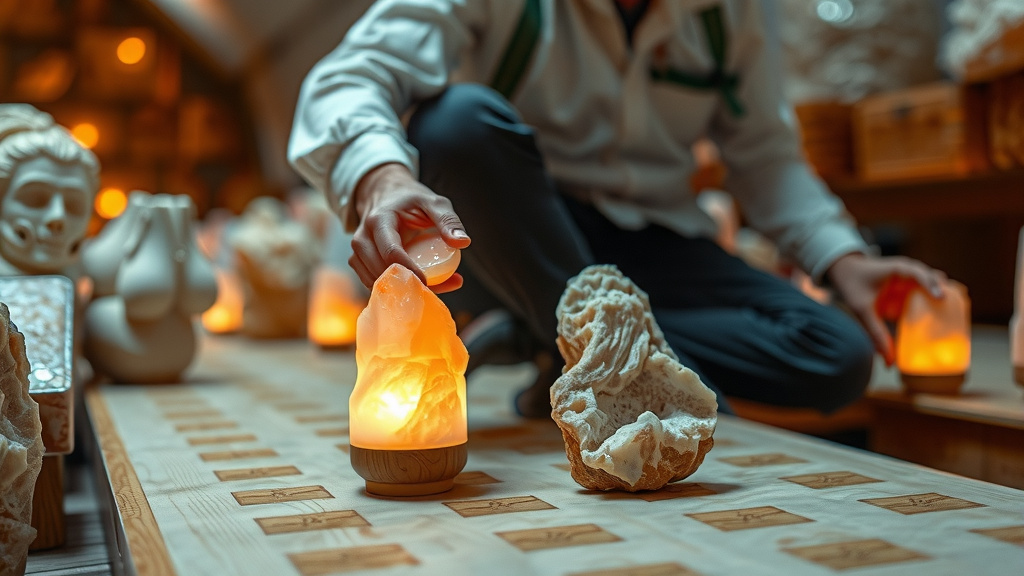
Imagine a sculptor working with a block of stone, but it’s salt! Artisans use tools like chisels and saws. They carefully remove excess salt. Their goal is to create smooth, rounded shapes. Many lamps are shaped like natural, irregular mounds. Others might be more geometric. The design often depends on the original shape of the salt chunk.
Preserving Natural Beauty
A key part of the carving process is retaining the salt’s natural character. Artisans don’t aim for perfect symmetry. Instead, they embrace the organic form. You might see natural crevices or variations in texture. This adds to the lamp’s unique charm. It’s about highlighting the salt’s inherent beauty.
Hollowing Out the Core
To fit a light bulb, a space must be created inside the salt chunk. Artisans use specialized tools for this. They carefully hollow out the center. This creates a cavity. The size of the cavity depends on the lamp size. It needs to be just right to accommodate the bulb and its wiring.
Adding the Electrical Components
Once the salt is shaped and hollowed, it’s time to add the functional parts. This makes it a usable lamp. Safety and durability are important here.
Installing the Base
Most Himalayan salt lamps come with a base. This base provides stability. It also houses the electrical cord and switch. Common materials for bases include wood or plastic. The base is securely attached to the bottom of the salt lamp. This ensures it won’t wobble.
Wiring and Bulb Holder
Inside the hollowed-out salt, a socket for the light bulb is installed. Wires are then run discreetly from the socket down to the base. A power cord with a plug is attached at the base. Many lamps use a simple on/off switch located on the cord itself.
Choosing the Right Bulb
What kind of light bulb should you use? We found that low-wattage incandescent bulbs are often recommended. Sometimes LED bulbs are used as well. The idea is to generate enough heat to warm the salt slightly. This warmth is believed by some to help release negative ions. Always check the manufacturer’s recommendations for your specific lamp.
Finishing Touches and Quality Checks
The lamp is almost ready! Before it’s packaged, a final inspection takes place.
Cleaning and Polishing
The carved salt lamp is gently cleaned. Any dust or salt residue is removed. Some lamps might receive a very light polish. This isn’t about making it shiny like glass. It’s more about removing any rough edges from the carving process.
Final Inspection
Skilled workers check the lamp for any flaws. They ensure the base is sturdy. They verify the wiring is secure. The overall appearance is assessed. Only lamps that meet quality standards move to the next stage. This ensures you receive a beautiful and functional product.
Ready for Your Home: Packaging and Distribution
The finished salt lamp is carefully packaged. This protects it during shipping. Many lamps are wrapped in plastic. This helps prevent moisture from damaging the salt. They are then placed in boxes, often with cushioning material. From there, they are distributed to stores and homes worldwide.
A Checklist for Your Lamp’s Journey:
- Salt is mined from Pakistan.
- Miners select the best salt chunks.
- Chunks are carved into lamp shapes.
- The inside is hollowed for a bulb.
- A base and electrical components are added.
- Each lamp is inspected before packing.
Conclusion
You’ve seen how Himalayan salt lamps transform from raw rock salt into beautiful decor. Miners carefully extract salt from Pakistan’s Khewra mine. Artisans then shape and hollow these chunks by hand. Finally, electrical components are added, and each lamp gets a quality check. This hands-on approach ensures each lamp retains its natural charm. Ready to bring a piece of this process into your home? Consider searching for a lamp from a reputable seller who highlights the artisanal creation process.
Frequently Asked Questions
Are Himalayan salt lamps carved by machines?
No, research shows that most Himalayan salt lamps are carved by hand. Artisans use tools like chisels and saws to shape the salt. This manual process helps preserve the salt’s natural texture and unique form. It ensures each lamp is one-of-a-kind.
Where does the salt for these lamps actually come from?
The salt used for these lamps is mined in the Punjab region of Pakistan. The Khewra Salt Mine is the primary source. This ancient mine yields the distinctively colored rock salt that gives the lamps their signature look.
Is there any difference in how different colored salt lamps are made?
The color variations primarily come from the natural mineral content within the salt deposit. The basic process of mining, shaping, and wiring is the same. Deeper pinks or reds usually indicate a higher concentration of certain minerals. Your lamp’s glow will reflect these natural differences.
Why are the bases for salt lamps usually made of wood?
Wood bases are commonly used because they are sturdy and naturally insulate well. This helps protect the surface your lamp sits on from any potential moisture. It also provides a stable platform for the wiring and bulb holder, ensuring safety and durability.
How do miners ensure they don’t damage the salt crystals during extraction?
Miners at the Khewra Salt Mine use traditional, non-explosive methods. They carefully chip away at the salt rock. This careful extraction technique helps to keep the salt’s delicate crystalline structure intact. This preserves the salt’s natural beauty for lamp making.
![10 Best Brand Uv Nail Lamp [2026]](https://bestdesklamp.com/wp-content/uploads/2026/08/10-best-brand-uv-nail-lamp-2026-featured-768x432.jpg)
![10 Best Budget Floor Lamps [2026]](https://bestdesklamp.com/wp-content/uploads/2026/08/10-best-budget-floor-lamps-2026-featured-768x432.jpg)