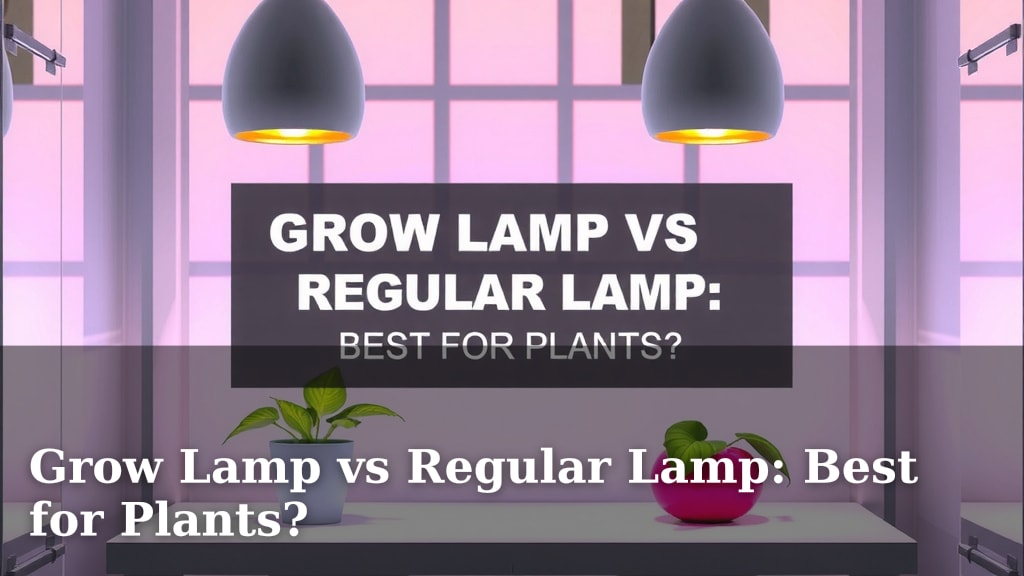
Grow Lamp vs Regular Lamp: Best for Plants?
When choosing a lamp for your plants, a grow lamp is almost always the best option. Regular lamps just don’t provide the right kind of light that plants need to thrive. Grow lamps are specifically designed to mimic sunlight, offering the necessary spectrum and intensity for healthy growth.
Understanding plant light needs can feel like deciphering a secret code. You might wonder if that pretty lamp on your desk can also help your fiddle-leaf fig. Research shows that while any light offers some benefit, specialized grow lights make a world of difference. They are the key to preventing leggy stems and sad, wilting leaves.
- Grow lamps give plants the right light spectrum.
- Regular lamps usually lack the necessary intensity.
- Choose grow lamps for better plant health and growth.
- Consider your plant’s specific needs.
Let’s break down the key differences between grow lamps and regular lamps, so you can pick the perfect light for your green buddies.
Choosing the Right Light for Your Indoor Plants
Selecting the best light source for your plant collection can feel a bit like a science experiment. You want your green friends to flourish, but sometimes the lighting situation is just… off. You might be tempted to grab any lamp you have lying around. But we found that not all lamps are created equal when it comes to plant care.
The Spectrum of Light: What Plants Actually Need
Plants have a specific “diet” when it comes to light. They use light energy for photosynthesis. This is how they make their food. Think of it like humans needing specific vitamins and minerals. Plants need particular wavelengths of light to grow healthy and strong.
Sunlight provides a full spectrum of light. This includes red and blue wavelengths, which are super important for plant growth. Red light helps with flowering and fruiting. Blue light is key for leafy growth and vegetative stages (like making more leaves!). Most regular lamps just don’t offer this full, balanced spectrum. We found that this lack can lead to weak, leggy plants.
Regular Lamps: The “Snack” Option for Plants
So, what about those lamps you use for reading or general room lighting? These are typically incandescent, halogen, CFL, or LED bulbs. While they produce light, it’s usually not the right kind for robust plant growth.
Incandescent and Halogen Lamps
These old-school bulbs get very hot. They also produce a lot of light in the yellow and red spectrum, but they’re quite inefficient. You’d need a ton of them to even get close to what a plant needs. Plus, the heat can be a problem for delicate leaves. Many experts suggest avoiding these for plant lighting (NCBI).
CFLs (Compact Fluorescent Lights)
CFLs are better than incandescents. They are more energy-efficient. Some CFLs come in “daylight” or “cool white” options. These can offer a bit more blue light. However, their light intensity often drops off quickly. This means only the plants closest to the bulb get enough light. We found that this limited coverage can leave other plants in the dark.
LEDs (Light Emitting Diodes)
Regular LED bulbs are great for saving energy and providing general room light. They last a long time. Some LEDs are designed to mimic daylight. This is better than other options. But, like CFLs, their intensity might not be enough for plants that need bright light. They often lack the specific red and blue wavelengths in the right amounts.
Grow Lamps: The “Full Meal Deal” for Your Plants
Grow lamps are engineered with plants in mind. They are designed to provide the light spectrum and intensity that plants need to thrive indoors. They’re not just any lamp; they’re a plant’s best friend.
What Makes Grow Lamps Different?
The key difference is the light spectrum. Grow lights are made to emit more of the red and blue wavelengths that plants crave for photosynthesis. You’ll often see them described as “full-spectrum” grow lights. This means they try to mimic natural sunlight as closely as possible.
Another crucial factor is intensity. Grow lamps are designed to push out enough light energy. This ensures that plants, even those further from the light source, can still photosynthesize effectively. Research and found that inadequate light intensity is a common reason for poor indoor plant growth.
Types of Grow Lamps
There are a few main types of grow lights you’ll encounter:
- LED Grow Lights: These are the most popular choice today. They are energy-efficient, long-lasting, and can be designed to produce specific light spectrums. You can find them in various shapes and sizes, from small bulbs to larger panels.
- Fluorescent Grow Lights: These are often used for seedlings or plants with lower light needs. They are less intense than LEDs or HIDs but are more affordable.
- HID (High-Intensity Discharge) Grow Lights: This category includes Metal Halide (MH) and High-Pressure Sodium (HPS) lights. They are very powerful but also generate a lot of heat and use more electricity. They are often used in larger setups.
Comparing Grow Lamps and Regular Lamps at a Glance
To help make it clearer, let’s look at a simple comparison:
| Feature | Regular Lamp | Grow Lamp |
|---|---|---|
| Light Spectrum | Limited, often yellow/white | Full spectrum (red/blue balanced), or targeted |
| Intensity | Generally low, light falls off fast | Higher, designed for plant needs |
| Purpose | Human vision, room illumination | Plant photosynthesis and growth |
| Heat Output | Varies (incandescent hot, LED cool) | Varies (LEDs generally cooler, HIDs hot) |
| Energy Efficiency | Varies (LEDs high, incandescent low) | Generally high (especially LEDs) |
When Can You Use a Regular Lamp for Plants?
Okay, so grow lamps are generally superior. But can a regular lamp ever help? If you have a plant that needs very low light, and you have a bright room with a regular LED lamp nearby, it might be enough. Think of plants like ZZ plants or snake plants. They are pretty forgiving.
However, if your plant is looking sad, stretched out, or not growing at all, a regular lamp is probably not cutting it. Many guidelines suggest that plants needing even moderate light will benefit significantly from a dedicated grow light (University Extension Office resources). It’s best to be cautious and provide what your plant truly needs.
Quick Checklist: Is Your Current Lamp Enough?
Before you decide, ask yourself these questions:
- Is your plant getting leggy or stretched out?
- Are the leaves small or pale?
- Is your plant failing to bloom or produce new growth?
- Is the light source more than a foot or two away from the plant?
- Does your current lamp feel warm to the touch but not hot?
If you answered “yes” to a few of these, it’s a strong sign that you might need to upgrade to a grow lamp. Your plants will thank you!
Conclusion
It’s clear that for vibrant, healthy indoor plants, a dedicated grow lamp is your best bet. While regular lamps offer light, they often lack the crucial spectrum and intensity plants need to photosynthesize effectively. Grow lamps are engineered to mimic sunlight, providing the red and blue wavelengths that fuel growth and prevent common plant problems like legginess. Don’t let your green friends miss out on the light they truly need to thrive indoors. Your next step is to assess your plants’ current light conditions and choose a grow lamp that fits their needs and your space.
Frequently Asked Questions
Do I really need a special grow lamp for my plants?
For most indoor plants, especially those that aren’t extremely low-light tolerant, a specialized grow lamp makes a significant difference. Regular lamps typically don’t provide the right balance of light wavelengths or sufficient intensity for healthy plant growth, research and found this leads to weaker plants.
What is the best type of grow lamp to buy?
LED grow lights are generally the top recommendation today due to their energy efficiency, long lifespan, and ability to produce specific light spectrums. They come in many forms, from simple bulbs to larger panels, making them suitable for various plant setups and sizes.
Can I use a regular LED bulb if it says “daylight” or “cool white”?
While “daylight” or “cool white” LED bulbs offer more blue light than other regular bulbs, they often still lack the necessary red wavelengths and overall intensity for robust plant growth. They can supplement light for very low-light plants, but a true grow lamp provides a more complete solution.
How close should my grow lamp be to my plants?
The ideal distance varies depending on the type and strength of your grow lamp, as well as your plant’s light needs. Generally, keep the light 6-18 inches away from the top of your plants; always check the manufacturer’s recommendations for your specific lamp.
Will a grow lamp increase my electricity bill significantly?
Modern LED grow lights are very energy-efficient, so the increase in your electricity bill is often minimal, especially compared to the benefits they provide for your plants. The cost savings over time from their long lifespan also help offset the initial investment.
![10 Best Buy Reading Lamp [2026]](https://bestdesklamp.com/wp-content/uploads/2026/08/10-best-buy-reading-lamp-2026-featured-768x432.jpg)
![10 Best Craft Floor Lamp [2026]](https://bestdesklamp.com/wp-content/uploads/2026/09/10-best-craft-floor-lamp-2026-featured-768x432.jpg)
![10 Best Bubble Fish Lamp [2026]](https://bestdesklamp.com/wp-content/uploads/2026/08/10-best-bubble-fish-lamp-2026-featured-768x432.jpg)