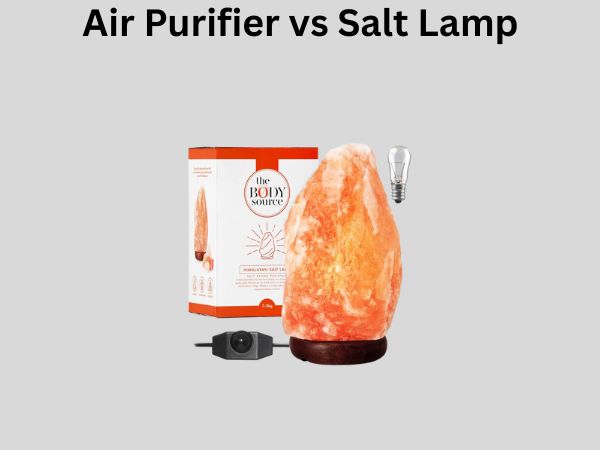
Air Purifier vs Salt Lamp: Which One Actually Improves Your Indoor Air Quality?
Have you ever walked into a room and felt like something was off with the air? Maybe it felt stale, or you noticed dust particles floating in the sunlight streaming through your window. You’re not alone in this experience. Many of us struggle with indoor air quality, and we’re constantly searching for solutions that actually work. Two popular options have gained significant traction in recent years: air purifiers and salt lamps. But here’s the question everyone’s asking—which one is actually worth your money and effort?
In this comprehensive guide, I’m going to break down everything you need to know about both options. We’ll explore how they work, what science says about their effectiveness, and most importantly, which one might be the better choice for your specific situation. Let’s dive in and get to the bottom of this indoor air quality debate once and for all.
Understanding the Air Quality Problem
Before we compare these two solutions, we need to understand what we’re actually trying to solve. Indoor air can be surprisingly polluted. Think about it—we spend roughly 90 percent of our time inside buildings, yet we often ignore what we’re actually breathing. Your home or office contains all sorts of invisible particles and pollutants. These range from dust mites and pet dander to mold spores, bacteria, volatile organic compounds, and even microscopic bits of pollen.
The EPA has found that indoor air can be two to five times more polluted than outdoor air in some cases. That’s a pretty sobering statistic when you think about it. Our homes are sealed tight with insulation and weatherstripping, which is great for energy efficiency but terrible for air circulation. This means pollutants get trapped inside, circulating through the same air we breathe day after day.
Common Indoor Air Pollutants
- Dust and dust mites
- Pet hair and dander
- Pollen
- Mold spores
- Bacteria and viruses
- Volatile organic compounds (VOCs) from paints and cleaning products
- Smoke particles
- Carbon dioxide buildup
So now that we understand the problem, let’s explore how salt lamps and air purifiers attempt to solve it.
What Is a Salt Lamp and How Does It Work?
Salt lamps have become incredibly trendy over the past decade. You’ve probably seen them in homes, offices, yoga studios, and even fancy restaurants. These beautiful glowing orbs are carved from Himalayan salt crystals, and they emit a warm, reddish-orange light when lit from the inside. But beyond their aesthetic appeal, are they actually doing anything to improve your air?
The theory behind salt lamps is based on something called “negative ion generation.” According to proponents, salt lamps release negative ions into the air, which supposedly bind to positive ions (which carry pollutants) and make them heavier, causing them to fall out of the air we breathe.
The Science (or Lack Thereof) Behind Salt Lamps
Here’s where things get interesting. When we look at the actual scientific evidence, the picture becomes much murkier. While salt lamps are beautiful and certainly emit negative ions to some degree, the amount they produce is minimal compared to what you’d actually need to see air quality improvements. Research published in peer-reviewed journals has found that salt lamps generate such a small quantity of negative ions that they’re unlikely to have any measurable impact on air quality in a room.
Think of it this way: a salt lamp emits maybe a few negative ions per cubic centimeter, while the air in your room contains millions of particles. The math simply doesn’t add up. It’s like trying to clean a swimming pool with a single bucket of water.
What Science Actually Says About Salt Lamps
Multiple studies have attempted to measure the air-purifying effects of salt lamps, and the results have been consistently disappointing. One notable study found that salt lamps had virtually no measurable impact on reducing common indoor air pollutants. Another research team concluded that any minor changes in air quality near a salt lamp could be attributed to the lamp’s heating effect, not its salt composition.
That doesn’t mean salt lamps are worthless, though. They can serve as a nice ambient light source and may have psychological benefits from their warm glow. But if your primary goal is to purify your indoor air, a salt lamp probably isn’t the solution you’re looking for.
What Is an Air Purifier and How Does It Work?
An air purifier is a mechanical device designed with one specific purpose: to remove contaminants from the air. Rather than relying on theoretical negative ion generation, air purifiers use physical filtration systems to actually trap pollutants.
The Main Filtration Technologies
Most modern air purifiers use one or more of these filtration methods:
- HEPA Filters: These high-efficiency particulate air filters can capture 99.97 percent of particles that are 0.3 microns or larger. They work by forcing air through a dense mesh of fiberglass fibers, which trap pollutants.
- Activated Carbon Filters: These excel at removing odors, gases, and volatile organic compounds. The porous structure of activated carbon absorbs these substances from the air.
- Ionic Filters: Some air purifiers use ionization technology, which is similar to the proposed mechanism of salt lamps but on a much more powerful scale.
- UV-C Light: Ultraviolet light can kill bacteria and viruses as air passes through the purifier.
- Photocatalytic Oxidation: This technology breaks down pollutants at a molecular level using titanium dioxide and UV light.
How Air Purifiers Actually Clean Your Air
Here’s how the process works: an air purifier pulls air from your room through an intake vent. That air passes through one or more filters, which physically trap particles and absorb gases. The cleaned air then exits back into your room through an exhaust vent. This process happens continuously, cycling through all the air in your room multiple times per hour, depending on the purifier’s CADR rating (Clean Air Delivery Rate).
Unlike salt lamps, this is an active, mechanical process that you can actually measure and verify. You can test the air before and after using an air purifier and see concrete improvements in particulate matter and certain pollutants.
Comparing Effectiveness: What the Research Shows
When we stack these two options against each other based on scientific evidence, the differences are dramatic.
Particle Removal Capability
Air purifiers with HEPA filters are clinically proven to remove up to 99.97 percent of airborne particles. This includes dust, pollen, pet dander, mold spores, and bacteria. Salt lamps, on the other hand, have no proven ability to remove particles from the air in any measurable way.
Odor and Gas Removal
Air purifiers equipped with activated carbon filters excel at removing odors and gaseous pollutants. If you cook frequently, have pets, or deal with smoke, an air purifier can make a noticeable difference. Salt lamps cannot address these issues.
Consistency and Reliability
Air purifiers work consistently as long as they’re plugged in and operating. There’s no variability in their performance. Salt lamps, meanwhile, have inconsistent output of negative ions that varies based on humidity, temperature, and other environmental factors.
Independent Testing
Numerous organizations have tested air purifiers and published results in scientific journals. You can find independent reviews from consumer reports and health organizations confirming their effectiveness. Salt lamps have virtually no independent scientific validation for air purification claims.
Health Benefits: Separating Fact from Fiction
Claims about the health benefits of both these options are often exaggerated. Let’s be honest about what each one can and cannot do for your wellbeing.
Salt Lamp Health Claims
Advocates for salt lamps claim they can help with respiratory problems, reduce allergies, improve sleep, boost mood, and even enhance athletic performance through negative ion generation. While negative ions do exist in nature (especially near waterfalls and beaches), the evidence that low concentrations improve human health is weak at best.
Some studies have suggested that negative ions might have minor mood-boosting effects, but these studies were often small and not well-controlled. The American Lung Association has stated that there’s no scientific evidence that salt lamps improve respiratory health.
Air Purifier Health Benefits
The health benefits of air purifiers are more grounded in science. If you suffer from allergies, asthma, or other respiratory conditions, reducing airborne particles and allergens can provide genuine relief. Multiple studies have shown that HEPA filtration reduces symptoms in people with allergies and asthma.
Air purifiers are particularly beneficial if you:
- Have allergies or asthma
- Live in an area with poor outdoor air quality
- Have pets that shed
- Live near traffic or industrial areas
- Have mold problems
- Are sensitive to odors and chemicals
Cost Considerations: Investment vs. Benefit
Let’s talk about money, because this often determines what we actually buy.
Initial Purchase Price
Salt lamps are inexpensive, typically ranging from ten to fifty dollars depending on size and quality. An air purifier, by contrast, usually costs between one hundred and five hundred dollars for a decent unit, with premium models reaching into the thousands.
Operating Costs
A salt lamp has minimal operating costs once purchased. You just need a light bulb, which uses minimal electricity. An air purifier, however, continuously draws electricity and requires regular filter replacements. Replacement filters can cost between thirty and one hundred fifty dollars depending on the type and model.
Value for Money
Here’s the reality: spending fifty dollars on a salt lamp that doesn’t improve your air quality is a waste of money, regardless of how nice it looks. Spending three hundred dollars on an air purifier that genuinely reduces allergens and pollutants is a solid investment, especially if you have health issues that benefit from cleaner air.
Long-term Expense Analysis
Over five years, a salt lamp might cost you sixty dollars (including bulbs). Over the same period, an air purifier might cost you six hundred to eight hundred dollars when you factor in electricity and filter replacements. However, if those five years come with fewer allergy attacks, better sleep, and improved respiratory health, most people would agree it’s worth the investment.
Aesthetic Appeal and Room Integration
One area where salt lamps genuinely shine is aesthetics. They’re beautiful. There’s no denying it. They create a warm, ambient atmosphere that many people find calming and pleasant. They’re also small and unobtrusive, fitting naturally into home décor.
Air purifiers, by comparison, are functional devices. They’re not ugly necessarily, but they don’t add to your interior design aesthetic. They require a dedicated space and make noise during operation. Modern air purifiers are sleeker than they used to be, but they’re still utilitarian in nature.
If you value the ambiance and decor aspect of your living space, you might use a salt lamp in your bedroom or living room while still using an air purifier in your bedroom or office. They’re not mutually exclusive options.
Maintenance and Practical Considerations
Beyond effectiveness and cost, you should consider the practical aspects of owning and maintaining each device.
Salt Lamp Maintenance
Salt lamps are incredibly low-maintenance. You occasionally dust them off, replace the light bulb when it burns out, and that’s about it. They don’t require any filters, cleaning schedules, or special care beyond avoiding excess moisture, as salt naturally absorbs water from the air.
Air Purifier Maintenance
Air purifiers require more attention. You need to replace filters on a regular schedule, typically every three to six months depending on usage and air quality. You should also occasionally check that the intake and exhaust vents aren’t blocked. Some models are quieter than others, and noise might be a consideration if you plan to use it in a bedroom.
Noise Levels
Salt lamps operate silently. Air purifiers produce varying levels of noise depending on their size and power setting. Many people use them on lower settings during the night to minimize sound, though this reduces their effectiveness.
The Hybrid Approach: Using Both Together
You don’t necessarily have to choose one or the other. Some people choose to use both an air purifier for genuine air cleaning and a salt lamp for aesthetics and ambiance. This approach gives you the best of both worlds—actual air purification where you need it most (bedroom, office, living room) and a beautiful light source where you want it.
If budget is a constraint, I’d recommend prioritizing the air purifier in the rooms where you spend the most time, especially your bedroom where you spend eight hours sleeping and breathing.
Environmental and Sustainability Factors
It’s worth considering the environmental impact of each option.
Salt Lamps
Salt lamps are harvested from underground deposits and require mining operations. While salt is abundant and renewable on geological timescales, mining does have environmental impacts. Once a salt lamp is made, it lasts indefinitely with minimal environmental impact from use.
Air Purifiers
Air purifiers require manufacturing, which uses resources and energy. They also consume electricity during operation. However, the environmental impact of electricity varies depending on your energy source. In areas with renewable energy, the environmental cost is much lower. Filters must be replaced and disposed of regularly, creating waste, though many manufacturers now offer recycling programs.
Neither option is perfectly sustainable, but both have relatively modest environmental footprints compared to many consumer products.
Making Your Decision: Which One Should You Choose?
So after all this analysis, how do you decide? Here’s my straightforward recommendation based on your specific situation:
Choose an Air Purifier If:
- You have allergies, asthma, or other respiratory conditions
- You live in an area with poor air quality
- You have pets that shed
- You’re concerned about pollution and contaminants
- You want measurable, scientifically-proven results
- You’re willing to invest in your health and air quality
Choose a Salt Lamp If:
- You primarily want attractive ambient lighting
- You have a very limited budget
- You already use other air cleaning methods
- You enjoy the aesthetic and don’t expect air purification
- You want a low-maintenance decorative item
Honestly, if your primary goal is cleaner air and better health, an air purifier is the only choice that makes sense based on current scientific evidence.
Additional Air Quality Improvement Strategies
Whether you choose an air purifier, a salt lamp, or both, you can enhance indoor air quality through other methods:
- Open windows regularly to bring in fresh air
- Use exhaust fans in kitchens and bathrooms

![10 Best Arco Lamp Replica [2026]](https://bestdesklamp.com/wp-content/uploads/2026/09/10-best-arco-lamp-replica-2026-featured-768x432.jpg)
![10 Best Buy Floor Lamp [2026]](https://bestdesklamp.com/wp-content/uploads/2026/08/10-best-buy-floor-lamp-2026-featured-768x432.jpg)