How Long Should You Use a Sun Lamp? Safe Time Limits
Most people should use a sun lamp for 20 to 30 minutes per session, once a day, usually in the morning. That’s the sweet spot we found after looking at common guidance from light therapy experts and device makers. Any longer doesn’t add much benefit and can raise your risk of eye strain or skin irritation.
Here’s the thing though: your ideal session length depends on a few things. The lamp’s intensity, how far you sit from it, and why you’re using it all matter. Someone chasing a winter mood boost might sit closer for less time, while a beginner may want to ease in with just 10 minutes. And no, more isn’t better — your body can only absorb so much light at once. Think of it like sunscreen: doubling up doesn’t double the protection.
- Start small: 10 to 15 minutes a day for your first week.
- Build up gradually: work toward 20 to 30 minutes once your body adjusts.
- Timing counts: morning sessions work best for mood and energy.
- Distance matters: check your lamp’s manual for the right sitting distance.
- Don’t stare: keep the light in your side vision, not directly in your eyes.
Still wondering what’s right for you? Below, we break down exactly how long to use a sun lamp for different goals, plus a few safety tips worth knowing before you flip that switch.
Recommended Sun Lamp Session Lengths by Goal
Your reason for using a sun lamp shapes how long each session should be. We researched guidance from the Mayo Clinic and Cleveland Clinic, and the pattern is clear: start at 20 to 30 minutes, then adjust based on how you feel. Here’s how that plays out for the most common uses.
| Your Goal | Suggested Time | Notes |
|---|---|---|
| Winter mood support | 20–30 minutes | Morning use works best |
| Low energy or sluggish mornings | 15–20 minutes | Pair with your coffee routine |
| Sleep schedule resets | 20–30 minutes | Use within an hour of waking |
| First-time users | 10–15 minutes | Build up slowly over a week |
For Seasonal Mood Slumps
If darker days leave you feeling flat, light therapy is one of the most studied fixes. Many experts say 20 to 30 minutes each morning is the standard starting point for seasonal patterns (Mayo Clinic). Stick with it daily for a couple of weeks before judging results. Consistency beats intensity every time.
For Energy and Morning Routines
Think of your sun lamp like a sunrise in a box. A 15 to 20 minute session while you eat breakfast or answer emails can help signal your brain that the day has started. You don’t need to carve out special time. Just fold it into something you already do. Our Beurer daylight lamp guide shows how to fold short sessions into a breakfast or email routine.
For Sleep Schedule Trouble
When your internal clock is off, morning light is the reset button. Research reviews on light timing suggest using your lamp within the first hour after waking (NIH). Late-day sessions can backfire by pushing your bedtime even later, so save the lamp for mornings only.
What Changes Your Ideal Session Time
Not every lamp is built the same, and neither is every setup. Three things move the needle on how long you should sit in front of yours.
Lamp Intensity (Lux)
Most therapy lamps emit 10,000 lux, which is the level experts recommend for standard sessions. If yours is dimmer — say 5,000 lux — you may need closer to 45 minutes to get the same effect. Check the box or manual. It should state the lux rating clearly.
Distance From the Lamp
Lux ratings are usually measured at a set distance, often 16 to 24 inches. Sit twice as far away, and the light drops off fast — like a campfire that stops warming you at ten feet. Follow the manufacturer’s distance guidance, then time your sessions to match.
Your Sensitivity
Some people feel jittery or get mild headaches after long sessions. If that’s you, dial back the time or sit a bit farther away. There’s no prize for pushing through. Many lamp makers suggest easing in over the first week for exactly this reason (Cleveland Clinic). Our step-by-step daylight lamp guide covers easing in over your first week in more detail.
Best Time of Day to Use Your Sun Lamp
Morning wins, and it’s not close. Your body’s internal clock responds most strongly to light shortly after waking, which is why experts almost always point to early sessions. Using it at night can confuse your brain into thinking it’s daytime — the opposite of what you want at 10 p.m.
Can’t do mornings? Early afternoon is your backup. Just try to finish sessions at least several hours before bed so you don’t sabotage your sleep.
Signs You’re Using Your Sun Lamp Too Long
More light isn’t more better — we found that overdoing it mostly just causes side effects without extra benefits. Watch for these warning flags:
- Eye strain or soreness that lingers after sessions
- Headaches that show up during or right after use
- Feeling wired or restless, like you’ve had three espressos
- Skin redness or irritation on your face
- Trouble falling asleep if you’ve shifted sessions later
Notice any of these? Cut your session length in half for a few days. If problems stick around, talk to a doctor before continuing.
How Long Until You See Results
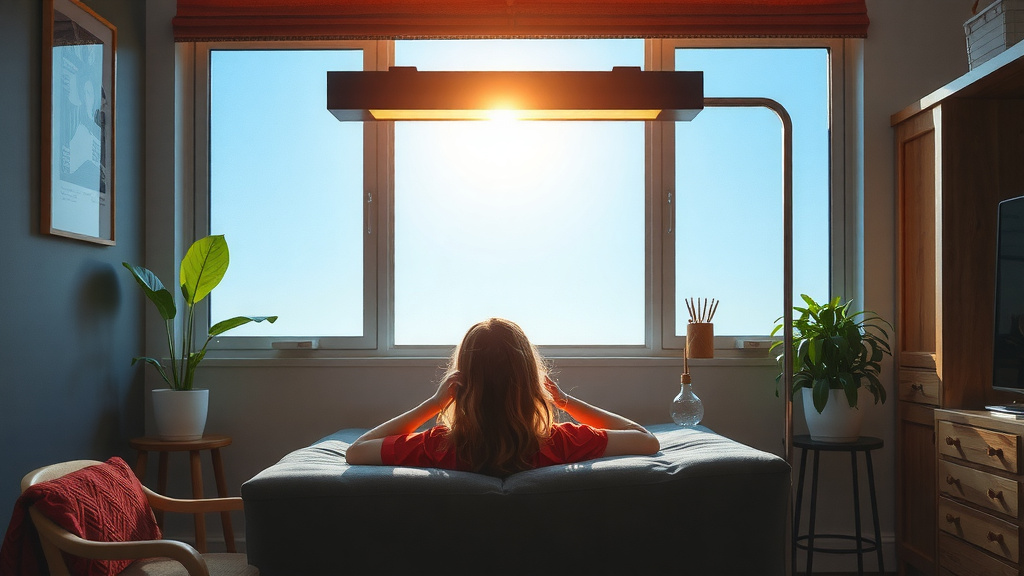
Patience matters here. Many experts say it can take one to two weeks of daily sessions before mood and energy improvements show up (Mayo Clinic). That’s normal — you’re nudging your body clock, not flipping a light switch in your brain. Give it a fair trial before deciding it isn’t working.
Safety Tips Worth Following
A sun lamp is low-risk when used right, but a few habits keep it that way. Here’s your quick checklist:
- Never stare directly into the light — keep it at a slight angle
- Use lamps labeled for light therapy, not tanning or heat lamps
- Check that your lamp filters UV light to protect skin and eyes
- Wear your glasses, but skip sunglasses during sessions
- Talk to your doctor first if you have eye conditions or take light-sensitive medications
- Stop and ask a professional if side effects don’t fade within a few days
One thing to avoid completely: tanning beds or bulbs that emit UV rays. Those are a different beast entirely, and not in a good way. A proper therapy lamp should feel like bright daylight — bright, but comfortable.
Quick Answers to Common Follow-Ups
Before you go, a couple of loose ends worth tying up.
Can You Split Sessions Into Two?
Yes, if mornings are cramped. Many people do 15 minutes at breakfast and 15 at lunch. Just keep both sessions in the first half of your day. The total light exposure is what counts, not one marathon sitting.
Should You Use It Every Day?
Daily use works best. Your body clock thrives on routine — same time, same seat, same lamp. Skipping days is like flossing only when you remember: better than nothing, but you’ll feel the difference when you’re consistent.
Do You Need a Prescription?
Nope. Sun lamps are over-the-counter devices in the US. That said, if you’re dealing with ongoing low mood, we recommend looping in your doctor. A lamp is a helpful tool, but it’s not a substitute for real medical care when you need it.
Conclusion
Finding your ideal sun lamp session doesn’t have to be complicated. We found that 20 to 30 minutes each morning works for most people, with beginners easing in at 10 to 15 minutes. Keep your lamp at the manufacturer’s recommended distance, stick to morning sessions, and watch for warning signs like headaches or eye strain. Results usually take a couple of weeks, so give it a fair shot before you judge it. Your next step is simple: check your lamp’s lux rating tonight, set it up at breakfast tomorrow, and start with a 10-minute session. Small, consistent light beats long, occasional sessions every time.
Frequently Asked Questions
Can I use a sun lamp while wearing makeup or skincare products?
Yes, most products are fine, but skip anything with strong active ingredients like retinol or exfoliating acids right before sessions. They can make your skin more light-sensitive. If your face feels irritated afterward, apply products after your session instead.
Does a sun lamp work through windows or in a bright room?
Regular window glass filters out much of the light your body responds to, so sitting by a sunny window isn’t a substitute. Your lamp works best when it’s the main light source hitting your face. Extra room lighting is fine and won’t hurt anything.
Is it safe to use a sun lamp while pregnant?
Light therapy is generally considered low-risk, but we recommend checking with your OB or doctor first. Pregnancy can shift your sleep patterns and mood in ways your doctor should factor in. They can help you set a session length that makes sense for you.
What should I do during my sun lamp session?
Almost anything, as long as your face stays angled toward the light. Eating breakfast, reading, scrolling your phone, or doing light work at a desk all count. You don’t need to sit still or meditate — just keep the lamp in your side vision.
Can kids or teens use a sun lamp?
Some teens use light therapy for winter slumps, but session lengths and safety differ for younger eyes. We suggest talking to a pediatrician before starting. If they get the green light, shorter sessions around 10 to 15 minutes are a sensible starting point.