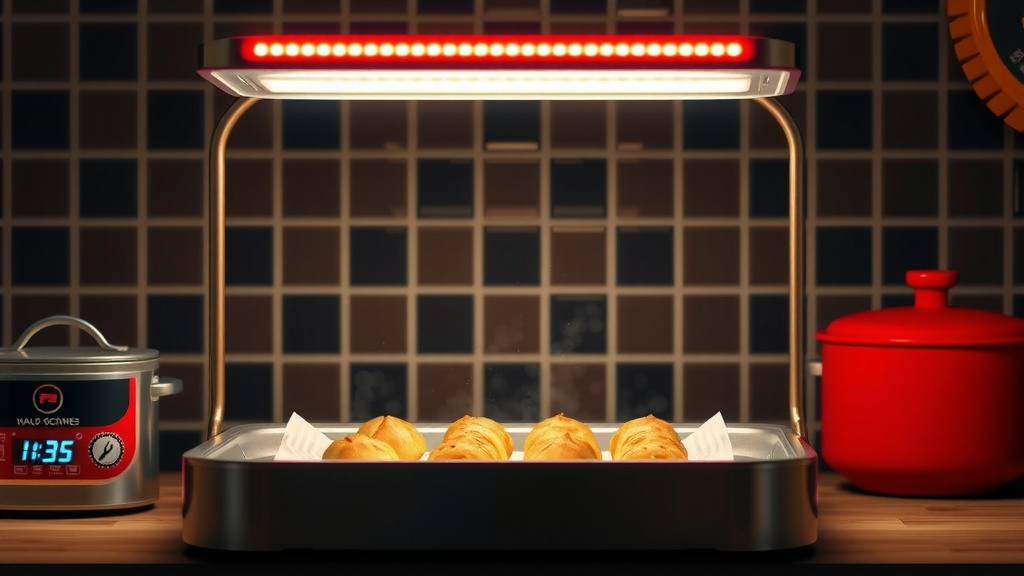
How Long Can Food Sit Under a Heat Lamp?
Food can sit under a heat lamp for a limited time to maintain safe serving temperatures. Generally, most cooked foods should not be held for more than 4 hours at a time to prevent bacterial growth. This guideline is essential for food safety and preventing illness.
Keeping food warm with a heat lamp is common in restaurants and buffets. However, the temperature needs to stay above 135°F (57°C) for safety. Holding food for too long, even when warm, can still be risky if the temperature drops below this critical point.
- Food under heat lamps has a time limit for safety.
- Most cooked foods are safe for up to 4 hours.
- Temperatures must stay above 135°F (57°C).
- Holding food longer than recommended increases risk.
- Proper temperature is key to preventing bacteria.
We’ve looked into the best practices for food safety and heat lamps, and below we’ll break down exactly how long your food can safely rest under that warm glow and why it matters.
Understanding Heat Lamp Food Safety Timelines
You’ve got delicious food that needs to stay warm for serving. Heat lamps seem like a great solution, right? They keep things cozy and ready for your hungry customers. But how long can you actually keep food under one safely? We found that most experts agree on a general rule to keep food safe from harmful bacteria.
The key is understanding that heat lamps aren’t magic wands. They maintain temperature, but they don’t cook or re-cook food. Keeping food in the “danger zone” – between 40°F (4.4°C) and 135°F (57°C) – allows bacteria to multiply rapidly. Your goal is to keep food well above this zone.
The 4-Hour Rule: A Golden Guideline
When it comes to food safety, many food service professionals rely on the 4-hour rule. This is a common recommendation from food safety organizations like the FDA. It suggests that hot food can be held for a maximum of 4 hours at a safe temperature. After this time, the risk of bacterial growth increases significantly, even if the food still feels warm.
Think of it like this: your heat lamp is like a cozy blanket for your food. It helps keep it comfortable for a while. But even the best blanket can only do so much before the room gets too chilly. For food, “too chilly” means dropping below the critical 135°F (57°C) threshold, where bacteria start throwing a party.
Why is 4 Hours the Magic Number?
This 4-hour limit is based on research into how quickly bacteria can multiply. In the temperature danger zone, bacteria can double in number in as little as 20 minutes. While a heat lamp aims to keep food above this zone, there’s always a slight risk of temperature fluctuations. Over 4 hours, even small dips can create an environment where harmful bacteria can reach unsafe levels.
Many food safety guidelines, such as those from the USDA, stress the importance of monitoring temperatures. Holding food for longer than 4 hours, even if it appears fine, is generally discouraged to prevent potential foodborne illnesses. It’s a proactive step to ensure customer safety.
Exceptions and Considerations
While the 4-hour rule is a solid benchmark, there are nuances. Some food establishments might use a system where they can hold food for up to 6 hours, but this typically involves strict temperature monitoring and labeling. This is often referred to as the “4-hour/6-hour rule.”
Under this system, food can be held for a maximum of 6 hours, *provided* its temperature never drops below 135°F (57°C). If the food does dip below 135°F (57°C) at any point during those 6 hours, it must be discarded if it has already been held for 4 hours or more. If it hasn’t reached 4 hours yet, it must be discarded within 4 hours of the temperature drop. This requires vigilant temperature checks throughout the holding period.
Maintaining Safe Serving Temperatures
The absolute minimum temperature for holding hot food safely is 135°F (57°C). This is the temperature recommended by the FDA Food Code. Anything below this point enters the danger zone where bacteria thrive.
Your heat lamp needs to be set high enough to consistently keep food at or above this temperature. It’s not just about the initial temperature when the food comes off the heat source; it’s about maintaining it reliably. Imagine you’re trying to keep a room at a comfortable 70°F. If your heater only kicks in sporadically, the room will get cold. Food under a heat lamp is similar.
How Heat Lamps Work (and Don’t Work)
Heat lamps primarily use radiant heat to keep food warm. They don’t circulate air like convection ovens. This means the surface of the food is what gets heated most directly. This can sometimes lead to food drying out over longer holding periods.
While they keep food warm, they aren’t designed to cook food. They can’t kill bacteria if the food is already in the danger zone. Their job is purely to maintain a safe, hot temperature for already cooked food. We found that using them for anything other than holding hot food is a misuse of the equipment.
Temperature Monitoring is Your Best Friend
To truly know if your food is safe, you need to measure its temperature. A reliable food thermometer is a non-negotiable tool for anyone using a heat lamp for holding. You should be checking the temperature of the food itself, not just the air around it.
Check the thickest part of the food, or in several places if it’s a large dish. Regular checks are essential. We found that making temperature monitoring a routine task significantly reduces the risk of food safety errors. This is especially true if you’re considering holding food beyond the standard 4-hour mark using the 6-hour allowance.
Factors That Influence Holding Time
Several things can affect how well your food holds up under a heat lamp and for how long. It’s not just a one-size-fits-all situation. Understanding these factors helps you make better decisions about food safety.
Type of Food Matters
Some foods hold their temperature and moisture better than others. For example, dense dishes like stews or casseroles might retain heat longer than delicate items like fried chicken or fish. Fried foods, in particular, can lose their crispness and become soggy if held too long, even if they’re still warm.
We found that foods with a lot of moisture, like soups, tend to hold temperature well. However, they can also be a breeding ground for bacteria if not kept hot enough. Foods that dry out easily might require special covers or a different holding method to prevent quality loss.
The Heat Lamp Itself
Not all heat lamps are created equal. The wattage and design of your heat lamp play a role. A more powerful lamp might provide more consistent heat. Also, consider the distance between the lamp and the food. Too close, and you risk drying out or even slightly cooking the surface. Too far, and the heat might not be sufficient to keep the food above 135°F (57°C).
Your setup matters. Is the food in a thin tray or a deep pan? A deeper container can help insulate the food and hold heat more evenly. We found that using appropriate serving pans that distribute heat well is a small change that can make a big difference.
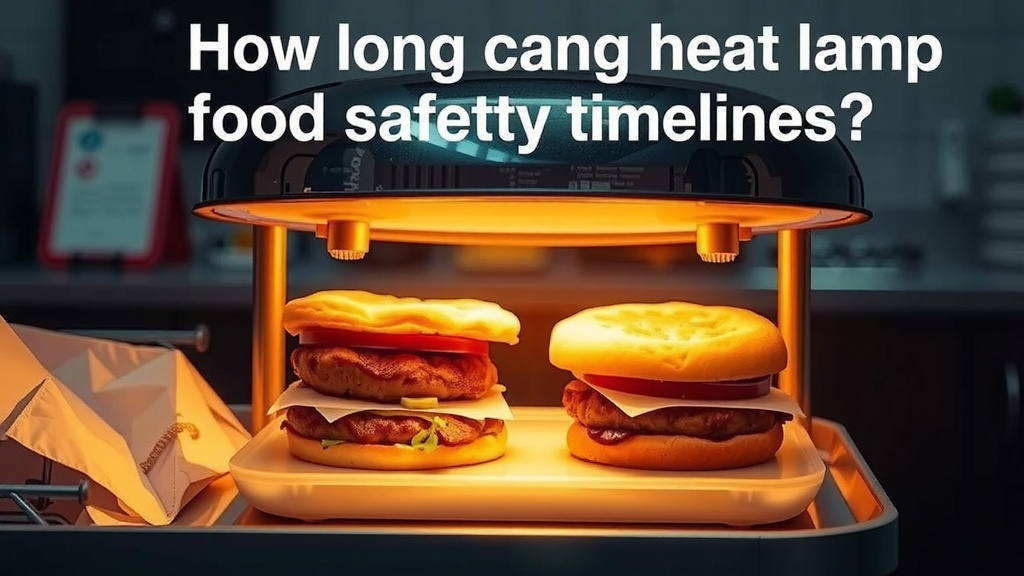
When to Discard Food Held Under Heat Lamps
Knowing when to let go of food is as important as knowing how to keep it warm. It’s better to be safe than sorry when it comes to foodborne illness.
When the Clock Strikes Four (or Six)
The primary trigger for discarding food is time. If you’re following the standard 4-hour rule, any food that has been held hot for 4 hours or more should be discarded. If you’re using the 6-hour rule, and the food has been held for 6 hours, it’s time to say goodbye, regardless of temperature.
Remember the 6-hour rule’s caveat: if at any point the temperature dropped below 135°F (57°C) and it had already been held for 4 hours, it must be discarded. If it hadn’t reached 4 hours, discard it within 4 hours of the temperature drop. It can feel wasteful, but food safety is paramount.
When Temperature Fails
If your temperature checks reveal that the food has fallen below 135°F (57°C) at any point, it needs to be evaluated. If it’s been under the heat lamp for less than 4 hours and dips below, it needs to be reheated rapidly to 165°F (74°C) before being placed back under the heat lamp, and the 4-hour clock restarts from the time it was placed back. However, if it’s been held for 4 hours or more and dips below, it must be discarded immediately.
The USDA and CDC strongly advise against reheating food multiple times. It’s often safer to discard food that has cooled down and is intended to be reheated for serving from a heat lamp setup. We found that it’s best practice to simply discard food that has failed to maintain temperature, especially if it’s already been held for a significant period.
Signs of Spoilage
Even if within the time or temperature guidelines, always use your senses. Does the food look off? Does it smell strange? These are clear indicators that the food is no longer safe to eat, regardless of how long it’s been under the heat lamp. Trust your instincts.
Your Food Safety Checklist
To make sure you’re keeping your food safe and delicious, keep these points in mind:
- Always check the food’s temperature. It must be 135°F (57°C) or higher.
- Never hold hot food for more than 4 hours in total.
- If using the 6-hour rule, monitor temps constantly.
- Discard food if it drops below 135°F (57°C) for any extended period.
- Discard food that shows any signs of spoilage (off smell, color).
- Know your heat lamp’s output and your food’s needs.
Conclusion
You now understand that keeping food warm under a heat lamp isn’t a free-for-all. The golden rule is generally 4 hours, with a possible extension to 6 hours under strict temperature control. Always remember that 135°F (57°C) is your absolute minimum temperature. We’ve found that diligent temperature monitoring and understanding your specific food and equipment are key. Your next step? Implement a routine temperature check right now. This simple habit will make a big difference in keeping your food safe and your customers happy.
Frequently Asked Questions
Can I reheat food under a heat lamp?
No, heat lamps are for holding already cooked food warm. They cannot safely reheat food to kill off bacteria. For food safety, you must reheat food to an internal temperature of 165°F (74°C) before placing it under a heat lamp.
What happens if food drops below 135°F under a heat lamp?
If food drops below 135°F (57°C), it enters the temperature danger zone where bacteria can multiply rapidly. If this happens before the 4-hour mark, the food should be rapidly reheated to 165°F (74°C) and the 4-hour clock restarts. If it happens after 4 hours, the food must be discarded.
Does the type of food affect how long it can sit under a heat lamp?
Yes, the type of food does matter. Denser foods like stews may hold heat better than delicate items like fried foods. Fried foods can lose crispness and become soggy, impacting quality even if the temperature is safe.
How do I know if my heat lamp is hot enough?
You must use a food thermometer to check the internal temperature of the food itself. Aim to keep your food at or above 135°F (57°C) consistently. Don’t rely on just feeling the warmth; always measure it.
Is the 6-hour rule always safe?
The 6-hour rule is safe only if the food’s temperature *never* drops below 135°F (57°C) during that entire period. If there’s any temperature fluctuation below that threshold, you must discard the food if it has already been held for 4 hours, or discard it within 4 hours of the temperature drop if it hasn’t reached 4 hours yet.