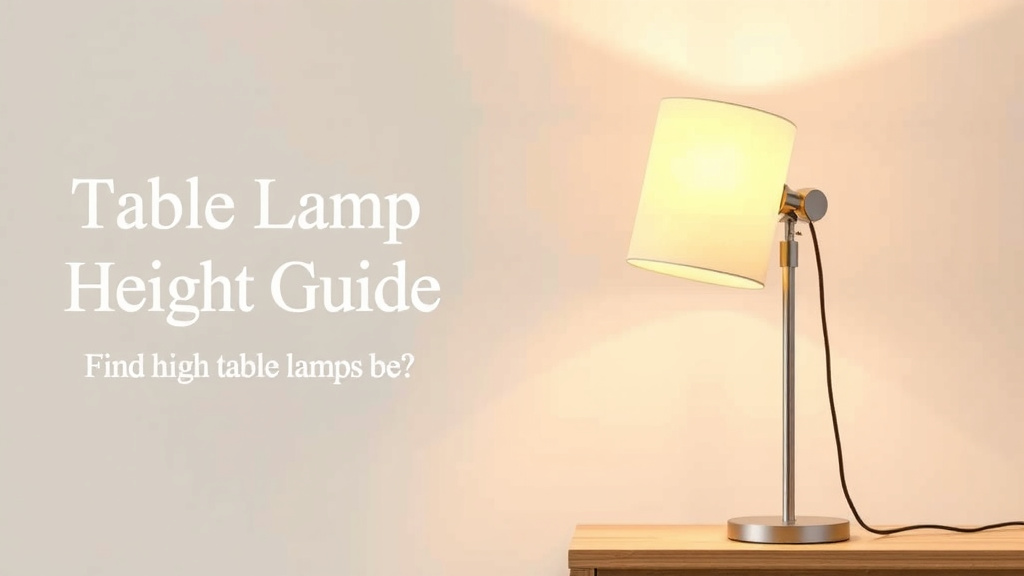
Table Lamp Height Guide: Find the Perfect Fit
You’re probably wondering how high table lamps should be. For ideal illumination and comfort, aim for the lamp’s shade to sit at or just above eye level when you’re seated. This prevents glare and ensures the light shines where you need it most, creating a pleasant atmosphere for reading or relaxing.
Getting the height just right is key to avoiding eye strain and making your space feel more inviting. Too low, and it can feel cramped. Too high, and the light might not reach your task area effectively. We’ve found that the perfect height depends on the lamp’s purpose and your furniture.
- Shade at or above eye level when seated is ideal.
- Consider the lamp’s function: reading, ambient light, etc.
- Think about furniture and seating arrangements.
- Proper height reduces glare and eye strain.
Ready to find that sweet spot? Let’s break down the simple guidelines for placing your table lamps so they look great and function perfectly.
Finding the Right Table Lamp Height
You’ve got your perfect table lamp, but where should it actually *sit*? Getting the height right is more than just aesthetics. It’s about creating a space that’s comfortable and functional for you. We’ve found that many people overlook this simple detail, leading to glare or uneven lighting. Let’s make sure your lamps serve you well.
The Golden Rule: Eye Level When Seated
The most common advice from lighting designers is to position the top of the lampshade at or just slightly above your eye level when you’re in your usual seated position. Think about where you’ll be when using the lamp most often – perhaps reading in an armchair or working at a desk. This placement ensures that the direct light source is mostly hidden from your view, preventing harsh glare and discomfort.
Why Eye Level Matters
When the light source is too low, you might find yourself squinting or getting headaches. Conversely, if it’s too high, the light might not effectively reach your task area, like the pages of a book or your workspace. Many experts suggest this eye-level sweet spot helps maintain a consistent and comfortable light distribution (Illuminating Engineering Society).
Factors That Influence Lamp Height
While eye level is a great starting point, a few other things can adjust your ideal height. Your furniture and the lamp’s purpose play a big role in how you’ll position it. It’s not a one-size-fits-all situation.
Consider Your Seating and Furniture
If you have a very low-slung sofa or a tall, plush armchair, your seated eye level will naturally change. You might need a taller lamp base to achieve that perfect shade height with lower furniture. For higher chairs, a shorter base might suffice. Always measure from where your eyes will be when you’re comfortably settled.
The Lamp’s Purpose: Task vs. Ambient Lighting
Is this lamp for reading or just adding a warm glow to the room? For task lighting, like beside a reading chair or on a desk, you want the light directed precisely where you need it. This usually means sticking closer to the eye-level rule. For ambient lighting, which aims to provide general illumination and mood, the height can be a bit more flexible. You might even position it slightly higher to spread light more broadly.
Shade Size and Shape
The dimensions of the lampshade also affect perceived height. A very wide shade might make a lamp look shorter, even if the top is at eye level. A narrower, taller shade might seem higher. Think about how the shade visually interacts with the base and the overall furniture grouping.
Recommended Heights by Placement Area
Let’s get into some more specific guidance for common areas in your home. We’ve found these general ranges are helpful.
Living Room Side Tables and Consoles
For side tables next to sofas or armchairs, aim for the lampshade top to be about 4-6 inches above the surface of the table. This usually puts it in the right eye-level zone when seated. If the table is very low, you might need a taller lamp or one with a wider shade to achieve this. A common mistake is using a lamp that’s too short, making it look lost next to a tall sofa.
Bedside Tables
On bedside tables, your primary need is likely reading light. So, the eye-level rule is paramount. You want enough light to comfortably read without straining, but not so much that it feels like a spotlight. Many find that a shade positioned just above eye level is ideal for winding down with a book before sleep.
Desks and Workspaces
Here, functionality is key. You need good, focused light without glare. For desk lamps, it’s often best to have the light source directed downwards, with the shade’s bottom edge somewhere between your eye level and the task surface. Some adjustable desk lamps allow you to position the light exactly where needed, making them very versatile.
Entryway or Console Tables
If the table is purely decorative, height is less critical. However, if you use it to greet guests or drop keys, consider placing a lamp so its light is inviting. A lamp that’s too short might not cast enough light to be functional or visually appealing in a larger space. Aiming for the lampshade top to be around eye level when standing can work well here.
A Quick Checklist for Perfect Lamp Height
Still feeling a bit unsure? Run through this quick checklist:
- Sit in your usual spot (sofa, chair, desk).
- Have someone help you measure from your eye level to the floor.
- Measure your table or surface height.
- Check if the lamp’s shade top would land at or slightly above your eye measurement.
- Consider the lamp’s purpose (reading, ambiance).
- Does the overall look feel balanced with your furniture?
Troubleshooting Common Lamp Height Issues
Sometimes, even with the best intentions, a lamp just doesn’t feel right. What can you do?
Too Much Glare?
If you’re seeing a harsh glare, your lamp is likely too short. The bulb or socket is probably visible from your seated position. Try a lamp with a taller base, or consider a shade that is wider or more opaque.
Not Enough Light Where You Need It?
If the light isn’t reaching your book or workspace, the lamp might be too tall, or the shade is too large and blocking the light. Adjusting to a slightly lower shade position or using a lamp with a more focused shade can help. We found that wider, shallower shades are often best for direct task lighting.
Lamp Looks Disproportionate?
If the lamp seems dwarfed by your furniture or towers over it, it’s a height issue. A good rule of thumb is that the lamp’s shade should generally be about two-thirds the height of the table it sits on. This creates a pleasing visual balance. For example, on a 24-inch table, aim for a lamp around 28-30 inches tall overall.
Conclusion
You’ve learned that the ideal table lamp height is about ensuring comfort and function. Aiming for the lampshade top to sit at or just above your seated eye level is your best bet. This simple guideline prevents glare and directs light where you need it most. Remember to consider your furniture and the lamp’s purpose, whether it’s for focused reading or creating a cozy ambiance. Now, go ahead and adjust your lamps to find that perfect spot!
Frequently Asked Questions
What’s the easiest way to figure out my eye level for lamp placement?
The simplest method is to sit in your favorite chair or at your desk as you normally would. Have a friend help you measure the distance from the floor to your eyes. This measurement is your target eye level for the top of the lampshade.
Can I use a lamp that’s taller than my eye level?
Yes, you can, but be mindful of glare. If the bulb or socket is visible from your seated position, it might be too high. Consider using a shade that’s wider or more opaque to diffuse the light effectively if your lamp base is on the taller side.
Does the size of the lampshade matter for height?
Absolutely. A very wide lampshade can make a lamp appear shorter, even if its top is at the correct eye level. Conversely, a tall, narrow shade might seem higher. It’s about the visual balance and how the shade diffuses light, not just the shade’s top edge.
How do I know if my lamp is too short?
If you’re experiencing harsh glare, or the light isn’t reaching your reading material or workspace effectively, your lamp is likely too short. The bulb or socket might be directly in your line of sight. Consider a lamp with a taller base or a shade that extends lower.
What if I need a lamp for both reading and general room light?
For lamps serving dual purposes, focus on the primary use. If reading is key, prioritize the eye-level rule for directed task lighting. You can then use other light sources in the room to supplement ambient lighting. Adjustable lamps are also a great option for versatility.