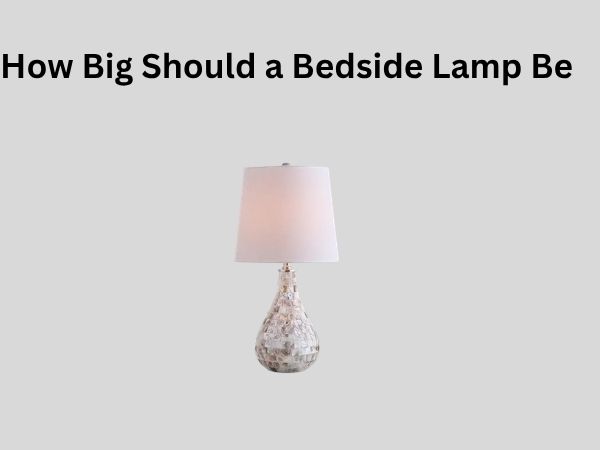
How Big Should a Bedside Lamp Be? A Complete Guide to Finding the Perfect Size
Have you ever found yourself squinting in the dark, reaching for a lamp that’s either way too bright or disappointingly dim? Or maybe you’ve bought a bedside lamp only to realize it looks completely out of proportion with your nightstand? You’re not alone. Choosing the right size bedside lamp is one of those decisions that seems simple until you actually try to make it.
The truth is, finding the perfect bedside lamp isn’t just about grabbing the first cute one you see. It’s about understanding proportions, brightness levels, and how that lamp will function in your personal space. Think of it like Goldilocks searching for the perfect chair—you need something that’s not too big, not too small, but just right.
In this guide, I’m going to walk you through everything you need to know about selecting the ideal bedside lamp size for your bedroom. Whether you’re working with a tiny studio apartment or a sprawling master suite, you’ll find practical advice that actually works.
Understanding the Basic Proportions of Bedside Lamps
Let’s start with the fundamentals. When we talk about lamp size, we’re really looking at three main dimensions: height, width at the base, and the overall visual weight it creates. These elements work together to either complement your bedroom or completely throw off the entire aesthetic.
The standard rule of thumb in interior design is that your bedside lamp should be approximately one-third the height of your nightstand. Sounds oddly specific, right? But there’s actual logic here. A lamp that follows this proportion looks intentional and balanced rather than like an afterthought you grabbed from a clearance bin.
Most nightstands range from 24 to 30 inches in height, which means your lamp should typically stand between 8 and 15 inches tall from base to the top of the shade. This is your sweet spot for most standard bedroom setups.
The Height Measurement That Actually Matters
Why Lamp Height Isn’t Just About the Bulb
Here’s something most people get wrong: when measuring lamp height, you need to account for the entire fixture, including the shade. Some people only measure the base and socket, which gives them a completely inaccurate picture of how the lamp will look when it’s finished.
The height of your lamp impacts several important factors. First, it determines the light trajectory—how the light spreads from your lamp to your bed and the surrounding area. Second, it affects the sightline when you’re lying in bed. You don’t want a lamp so tall that you’re staring directly into the bulb when your head hits the pillow.
Ideally, when you’re lying down in bed, the bottom of the lamp shade should be at or slightly above eye level. This prevents that annoying glare and creates a more ambient, comfortable lighting environment.
Measuring from Your Mattress Perspective
Here’s a pro tip: when you’re shopping for a bedside lamp, bring a measuring tape and actually test it out if you can. Imagine yourself lying in bed and determine where that lamp’s light source would be relative to your eye level. Some stores will let you check this, or you can use their furniture layout tools to visualize it.
If your mattress sits particularly high or low, this becomes even more crucial. A platform bed with a high mattress might need a shorter lamp than a bed sitting close to the ground.
The Nightstand Relationship: Size and Proportion
Matching Your Lamp to Your Nightstand Dimensions
Your nightstand is like the launching pad for your lamp, so they need to work together visually. If you have a delicate, narrow nightstand, you’ll want a lamp with a slender profile that won’t overpower the surface. Conversely, a substantial, chunky nightstand can handle a larger, more commanding lamp.
Look at the width of your nightstand’s surface. Your lamp’s base should occupy no more than one-third of that width. If your nightstand is 24 inches wide, your lamp’s base shouldn’t exceed 8 inches across. This leaves plenty of room for a lamp, a book, your phone, maybe a glass of water, and other nighttime essentials.
Creating Visual Balance on Your Bedside Table
Think about what else lives on your nightstand. If you have a stack of books, a decorative piece, or a phone charger, your lamp needs to coexist peacefully with these items. A lamp that’s too wide will crowd everything together and create a cluttered, chaotic feeling right when you’re trying to relax.
The lamp should be the focal point without being overwhelming. It’s like the supporting actor in a scene—important, but not stealing all the attention from the lead.
Shade Size and How It Impacts Overall Dimensions
Why the Shade Matters More Than You Think
The lampshade is where a lot of people stumble. You might find a beautiful lamp base, but then the shade is either ridiculously large or tiny, throwing off the entire proportion. The shade should extend slightly beyond the base on all sides—typically about 1 to 2 inches of overhang is ideal.
A shade that’s too small makes the lamp look unfinished and awkward, like the top half got lost. A shade that’s too large swallows the base and creates a top-heavy appearance that looks unstable, even if it’s perfectly safe.
Shade Diameter Guidelines
For most bedside lamps, aim for a shade diameter between 8 and 14 inches. If your lamp base is narrow and simple, you can go slightly larger. If your base is ornate and detailed, a smaller shade lets those design elements shine.
The depth of the shade also matters. A shallow shade throws light too far upward, while a deeper shade directs light downward, which is generally better for reading or working in bed.
Brightness and Its Relationship to Physical Size
Understanding Lumens, Not Just Watts
Here’s something critical that many people overlook: a bigger lamp doesn’t necessarily mean brighter light. The brightness of your lamp depends on the bulb’s lumen output, not the physical size of the lamp itself. You could have a tiny lamp with a super bright LED bulb and a massive lamp with a weak incandescent bulb.
For bedside lamps, you typically want somewhere between 300 and 800 lumens, depending on how much reading you do in bed. A lamp with a smaller physical size can absolutely provide adequate lighting if you choose the right bulb.
Shade Material and Light Distribution
The material of your shade affects how the light spreads. A white or cream-colored linen shade diffuses light evenly, creating a soft glow. A darker shade concentrates light downward. A translucent shade glows from within, adding ambiance. None of these is “better”—it’s just about what suits your needs and preferences.
Room Size and Lamp Proportions
The physical size of your bedroom actually influences what size bedside lamp works best. In a small bedroom, an oversized lamp can make the space feel cramped and cluttered. In a large bedroom with a massive bed, a tiny lamp might look lost and insignificant.
If you’re in a small bedroom, stick toward the smaller end of the spectrum—around 10 to 12 inches tall. In a spacious room with a large bed, you can comfortably go bigger—up to 18 or 20 inches.
Style Considerations That Affect Perceived Size
How Design Elements Make Lamps Look Bigger or Smaller
Interestingly, the style of your lamp can make it look bigger or smaller than its actual dimensions. A lamp with a cylindrical shade looks smaller than a lamp with a much wider, bell-shaped shade, even if they’re the same height.
A lamp with a skinny base and delicate details looks smaller and more refined. A lamp with a chunky ceramic base and thick shade frame looks heavier and more substantial, even if it’s only slightly taller.
Color and Visual Weight
Dark-colored lamps appear heavier and larger, while light-colored lamps feel more delicate and smaller. If you’re concerned about a lamp looking too bulky, choosing a white or cream shade instead of a dark gray or black shade can help it feel less imposing.
Practical Measurements You Should Take Before Buying
Creating a Measurement Checklist
Before you shop, grab a tape measure and document the following:
- The exact height of your nightstand (measure from floor to top surface)
- The width and depth of your nightstand’s surface
- The height from the top of your nightstand to eye level when you’re lying in bed
- The width of your bed frame and how much space you actually have
- Any wall space above your nightstand (if the lamp is too tall, it might look cramped)
- The height of your headboard, if you have one
With these measurements in hand, you’ll make much better decisions when shopping.
The Virtual Testing Method
Many online retailers now offer augmented reality tools that let you visualize how a lamp will look in your space using your phone camera. Take advantage of these tools. It’s not perfect, but it gives you a much better sense than just looking at a product photo.
Common Size Mistakes People Make
Going Too Large
The most common mistake is buying a lamp that’s too tall. People see a beautiful lamp and fall in love without considering proportions. Then it arrives and completely dominates the nightstand, blocks part of the wall behind it, or casts awkward shadows across the room.
Remember, bedroom design is about creating a calm, restful environment. An oversized lamp works against that goal by introducing visual clutter and imbalance.
Choosing the Wrong Shade Size
The second mistake is pairing a lamp base with a shade that doesn’t match its proportions. You might have a perfect lamp base, but adding a shade that’s too large or too small ruins the effect. Always consider the shade as part of the overall design, not as a separate component you can swap in later.
Ignoring the Bulb’s Role
People often buy a lamp for its look without considering what kind of bulb it needs. If you select a lamp that requires a specialty bulb or has compatibility issues with LED bulbs, you’ll struggle to get the brightness and light quality you want.
Different Scenarios: Sizing Lamps for Various Situations
For Small Bedrooms or Apartments
In tight spaces, aim for lamps between 10 and 12 inches tall with a base diameter of no more than 5 inches. Choose a slim design and light colors. This keeps the space feeling open and uncluttered.
For Master Bedrooms with Large Nightstands
You have more flexibility here. Lamps between 16 and 22 inches tall work well, and you can use wider bases and larger shades. You might even consider pairs of matching lamps if you have nightstands on both sides of the bed.
For Floating Nightstands or Wall-Mounted Shelves
If your nightstand is smaller or wall-mounted, stick with more compact lamps—12 inches or less. The lack of visual grounding means you need the lamp to feel lighter and less imposing.
For Bedside Tables That Are Higher Than Standard
Platform beds and contemporary frames often sit higher than traditional beds. If your nightstand is 32 inches or taller, you can definitely go bigger—up to 20 inches tall. The higher surface means the lamp has more breathing room.
Material and Weight Considerations
The material of your lamp affects how sturdy it needs to be and how it contributes to the room’s style. A ceramic base needs to be thicker and more substantial to feel stable, which makes it appear larger. A metal or wood base can be more delicate while still feeling secure.
If you have kids or pets in your bedroom, weight distribution matters too. A heavier lamp with a wider base is more stable and less likely to tip over if accidentally bumped.
Adjustability and Task Lighting
When Size Needs to Accommodate Function
Some bedside lamps need to accommodate reading, which is different from ambient lighting. If you frequently read in bed, you might need a slightly taller lamp so it illuminates your book properly without creating shadows.
Adjustable or swing-arm lamps can be smaller in their base footprint while still providing directional task lighting. These are great for small nightstands because they don’t take up much space but deliver the functionality you need.
Symmetry and Matching Pairs
If you’re planning to have matching lamps on both sides of your bed, symmetry becomes important. Two identical lamps create visual balance and a more polished, intentional look. Make sure both nightstands are roughly the same size, or the matching lamps might look disproportionate on one side.
If your nightstands are different sizes, you might actually want different sized lamps to maintain visual balance. The nightstand that’s larger or more prominent can handle a slightly larger lamp.
Conclusion
Choosing the right bedside lamp size isn’t complicated once you understand the basic principles. You’re looking for a lamp that’s approximately one-third the height of your nightstand, with a base and shade that are proportionate to each other and your nightstand surface. The shade should extend slightly beyond the base, and the overall effect should feel balanced and intentional rather than cramped or inadequate.
Take your time to measure your space, consider your room’s style and size, and think about how you’ll actually use the lamp. Will you be reading in bed? Do you need bright task lighting, or is ambient illumination your priority? These factors all influence whether a larger or smaller lamp is right for you.
Remember that the most beautiful lamp in the world won’t work for your space if it’s the wrong size. But with the guidance in this article, you’ll confidently choose a lamp that’s not just beautiful, but perfectly proportioned for your bedroom. Sweet dreams and well-lit nights ahead!
Frequently Asked Questions
What is the standard size for a bedside lamp?
The standard bedside lamp typically ranges from 12 to 18 inches in total height from base to top of shade, with a base diameter between 4 and 7 inches. However, “standard” really depends on your specific nightstand height and room proportions. The key rule is that your lamp should be about one-third the height of your nightstand for optimal visual balance.
Can a bedside lamp be too small?
Absolutely. A lamp that’s too small looks unfinished and fails to make visual impact on your nightstand. It might also provide inadequate lighting if you like to read in bed. If your lamp’s shade is less than 8 inches in diameter or your lamp is significantly shorter than 10 inches, it might feel disproportionately tiny compared to standard nightstand furniture.
How do I know if a lamp will fit my nightstand?
Measure your nightstand’s height, width, and depth. The lamp should be no more than one-third the nightstand’s height, and its base should take up no more than one-third of the nightstand’s surface width. Check that you have clearance above
![10 Best Arc Floor Lamps For Living Room [2026]](https://bestdesklamp.com/wp-content/uploads/2026/09/10-best-arc-floor-lamps-for-living-room-2026-featured-768x432.jpg)

![10 Best At Home Gel Led Lamp [2026]](https://bestdesklamp.com/wp-content/uploads/2026/09/10-best-at-home-gel-led-lamp-2026-featured-768x432.jpg)
![10 Best Affordable Light Therapy Lamp [2026]](https://bestdesklamp.com/wp-content/uploads/2026/09/10-best-affordable-light-therapy-lamp-2026-featured-768x432.jpg)