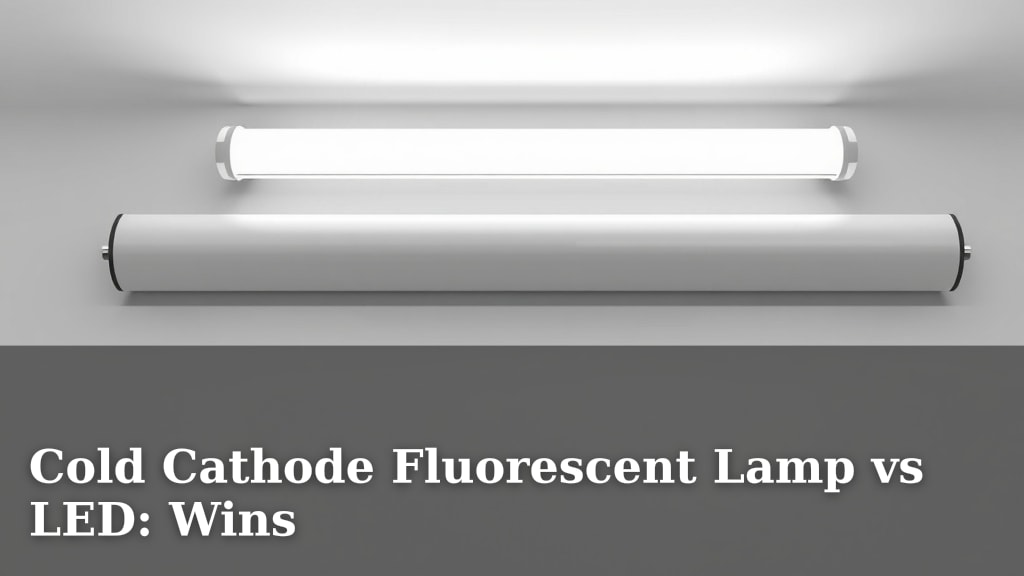
Cold Cathode Fluorescent Lamp vs LED: Wins
When comparing Cold Cathode Fluorescent Lamps (CCFLs) and LED lighting, LEDs are the clear winner for most applications today. While CCFLs were once common, especially in older LCD screens, they are being replaced by LEDs due to their superior energy efficiency and longer lifespan.
You might be wondering if your old tech still uses CCFLs. Many older laptops and monitors did. But if you’re looking for new lighting solutions, LEDs offer a brighter future. They use much less power and last many times longer than CCFLs, saving you money and hassle.
- LEDs are generally more energy-efficient than CCFLs.
- LEDs have a much longer lifespan, lasting tens of thousands of hours.
- CCFLs can contain mercury, making disposal more environmentally challenging.
- LEDs offer better light quality and control options.
Let’s dive into the specific advantages that make LEDs the preferred choice over CCFLs for modern lighting needs.
Why LEDs Shine Brighter Than CCFLs Today
When you’re comparing lighting technologies, it’s pretty clear that LEDs have taken the lead. They’ve practically revolutionized how we light our homes and our devices. Let’s look at why these tiny lights are now the go-to choice for so many people.
Energy Efficiency: The Big Money Saver
One of the most talked-about benefits of LEDs is how much less energy they consume. Think of it like this: LEDs are incredibly efficient at turning electricity into light. They don’t waste much energy as heat, unlike older technologies.
How Much Less Energy Do LEDs Use?
Research consistently shows that LEDs use a fraction of the power compared to CCFLs. For example, a typical LED bulb might use 80-90% less energy than an equivalent incandescent bulb, and significantly less than CCFLs too. This means lower electricity bills for you, which adds up over time.
The Cost Savings Add Up
Imagine paying less each month just because your lights are more efficient. That’s the reality with LEDs. Over the lifespan of an LED bulb, the energy savings can often outweigh the initial purchase price. It’s a smart investment for your wallet and the planet.
Lifespan: Built to Last and Last
Another major win for LEDs is their incredible lifespan. CCFLs, while better than old incandescent bulbs, simply can’t compete. LEDs are designed for the long haul. You’ll likely replace many CCFL bulbs before you even think about replacing an LED.
Tens of Thousands of Hours of Light
We’re talking about a serious difference here. While a CCFL might last around 10,000 to 20,000 hours, LEDs can easily last 25,000 to 50,000 hours, and some even longer. This means you’ll be changing bulbs far less often. Think of the convenience!
Less Hassle, Less Waste
Constantly climbing ladders to change burnt-out bulbs can be a real pain. With LEDs, that becomes a distant memory. This extended lifespan also means less waste going into landfills, which is a good thing for everyone.
Environmental Impact: A Greener Choice
When we look at the environmental side, LEDs also come out ahead. One of the main concerns with CCFLs is the presence of mercury. This is a hazardous substance that requires special handling during disposal.
No Mercury in LEDs
LEDs are mercury-free. This makes them a much safer option for your home and for the environment. Proper disposal of CCFLs can be tricky and costly, whereas LEDs are generally easier and safer to get rid of when their time finally comes.
Reduced Carbon Footprint
Because LEDs use less energy, they contribute to a lower carbon footprint. Generating electricity often involves burning fossil fuels, so using less power means less pollution. It’s a small change that has a big collective impact.
Light Quality and Features: Better, Brighter Light
It’s not just about efficiency and lifespan; LEDs also offer superior light quality and more options for controlling your lighting. You can often get a much better lighting experience with LEDs.
Brighter and More Consistent Light
LEDs can produce a very bright and clear light. They often provide a more consistent illumination without the flickering that can sometimes happen with CCFLs. You can also find LEDs in a wide range of color temperatures, from warm and cozy to cool and crisp.
Dimming and Color Control
Many LED lights are designed to be dimmable, allowing you to adjust the brightness to suit your mood or activity. Some even offer color-changing capabilities. This level of control is often difficult or impossible to achieve with CCFL technology.
Durability: Tougher Than You Think
CCFLs are essentially glass tubes filled with gas. This makes them quite fragile and prone to breaking if dropped or mishandled. LEDs, on the other hand, are solid-state devices, meaning they have no filaments or glass tubes.
Resistant to Shock and Vibration
This solid-state design makes LEDs much more resistant to shock and vibration. You don’t have to worry as much about them breaking if they are accidentally knocked around. This is particularly useful in applications where lights might be exposed to more physical stress.
A Quick Comparison Table
Here’s a simple way to see the main differences:
| Feature | CCFL (Cold Cathode Fluorescent Lamp) | LED (Light Emitting Diode) |
|---|---|---|
| Energy Efficiency | Moderate | Excellent |
| Lifespan | 10,000 – 20,000 hours | 25,000 – 50,000+ hours |
| Mercury Content | Yes | No |
| Durability | Fragile (glass tubes) | Very Durable (solid-state) |
| Light Control | Limited | Excellent (dimming, color) |
| Heat Output | Moderate | Low |
Making the Switch: Your Checklist
Thinking about upgrading your lighting or understanding your current tech? Here’s a quick rundown of what makes LEDs the smart choice:
- Check if your old devices still use CCFLs (like older monitors).
- Consider LED replacements for long-lasting, efficient home lighting.
- Look for the energy star rating on LED products for maximum efficiency.
- Enjoy the convenience of fewer bulb changes with LEDs.
- Feel good about choosing a mercury-free lighting option.
- Explore the variety of light colors and dimming options LEDs offer.
Conclusion
As you can see, LEDs are the clear frontrunner when comparing them to CCFLs. Their superior energy efficiency translates directly into lower electricity bills for you. Plus, their exceptionally long lifespan means you’ll spend less time and money replacing bulbs. LEDs also offer a greener, mercury-free option with better light quality and durability. If you’re upgrading lighting in your home or looking at new devices, choosing LEDs is a smart investment for both your wallet and the environment. Consider making the switch to LEDs for a brighter, more sustainable future.
Frequently Asked Questions
Are CCFLs still used in any new technology?
While CCFLs were common in older LCD screens for laptops and monitors, you’ll find they are rarely used in brand-new technology today. Manufacturers have largely moved on to LEDs due to their performance advantages. Most modern displays and lighting solutions exclusively use LEDs.
How do I know if my old device has CCFLs?
If you have an older flat-screen monitor or a laptop made roughly before 2010, there’s a good chance it uses CCFL backlighting. Newer devices almost exclusively use LEDs. You can often find this information in the device’s manual or by searching its model number online.
Is it safe to dispose of old CCFL bulbs?
You need to be cautious when disposing of CCFL bulbs because they contain a small amount of mercury. It’s best to check with your local waste management or recycling center for proper disposal guidelines. Many areas have special collection points for hazardous materials like fluorescent bulbs.
Can I replace a CCFL backlight in a monitor with an LED kit?
Yes, it is possible to find LED backlight retrofit kits for older monitors that originally used CCFLs. These kits can extend the life of your monitor and offer improved brightness and efficiency. However, the installation can be complex and may require some technical skill.
Do LEDs produce less heat than CCFLs?
Yes, LEDs produce significantly less heat than CCFLs. CCFLs convert a portion of their energy into heat, which can sometimes affect the performance of surrounding components. LEDs are much more efficient at converting electricity into light, meaning they run cooler and are less likely to contribute to overheating.
![10 Best Bulb For Himalayan Salt Lamp [2026]](https://bestdesklamp.com/wp-content/uploads/2026/08/10-best-bulb-for-himalayan-salt-lamp-2026-featured-768x432.jpg)

![10 Way Table Lamps [2026]](https://bestdesklamp.com/wp-content/uploads/2026/09/10-way-table-lamps-2026-featured-768x432.jpg)