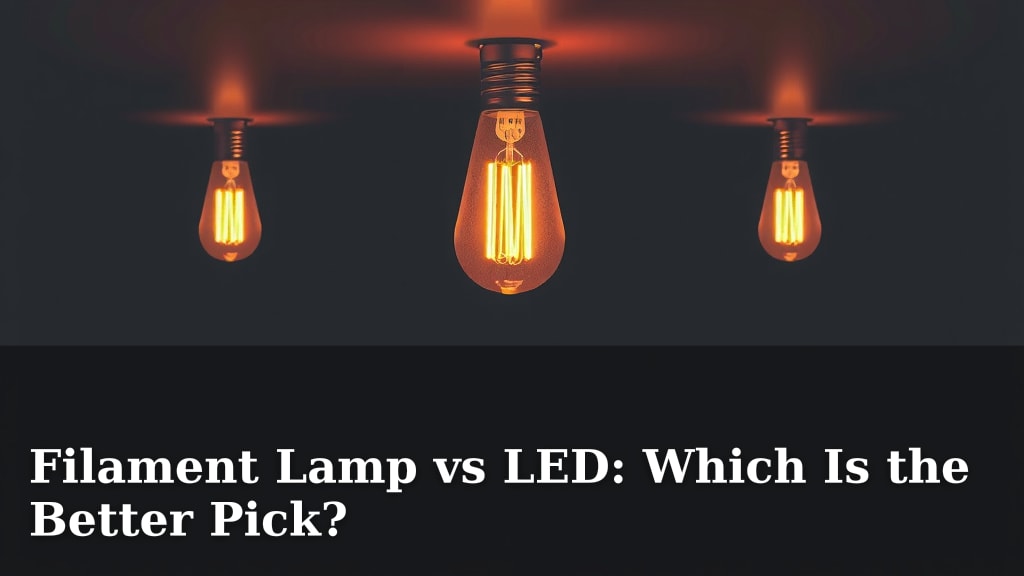
Filament Lamp vs LED: Which Is the Better Pick?
When choosing between a traditional filament lamp and an LED bulb, **LEDs are the clear winner for most people**. They offer superior **energy efficiency**, a much longer lifespan, and better durability, making them the smarter long-term choice for your home lighting needs. While filament bulbs give off a warm glow, they burn out quickly and consume a lot of power.
You might be wondering about the cost or if the light quality is different. It’s true that filament lamps offer a distinct aesthetic, but the initial higher cost of LEDs is quickly offset by the savings on your electricity bill and replacement bulbs. Plus, modern LED technology means you can find bulbs that mimic that classic warm light you love, just with all the modern benefits.
- LEDs save you money on electricity.
- LEDs last much longer than filament bulbs.
- LEDs are more durable and less fragile.
- You can find LEDs in warm, cozy colors.
Let’s break down the key differences so you can make the best choice for your lighting needs. We’ll compare them on cost, performance, and what kind of light they provide.
Filament Bulbs Versus Modern LEDs: Making the Right Lighting Choice
You’re probably looking at your light bulbs and wondering if it’s time for an upgrade. Filament lamps have that classic look, but LEDs are the new kid on the block, promising big savings. Let’s compare them head-to-head so you can decide which is best for your home.
Understanding the Technology Behind the Glow
What Exactly is a Filament Bulb?
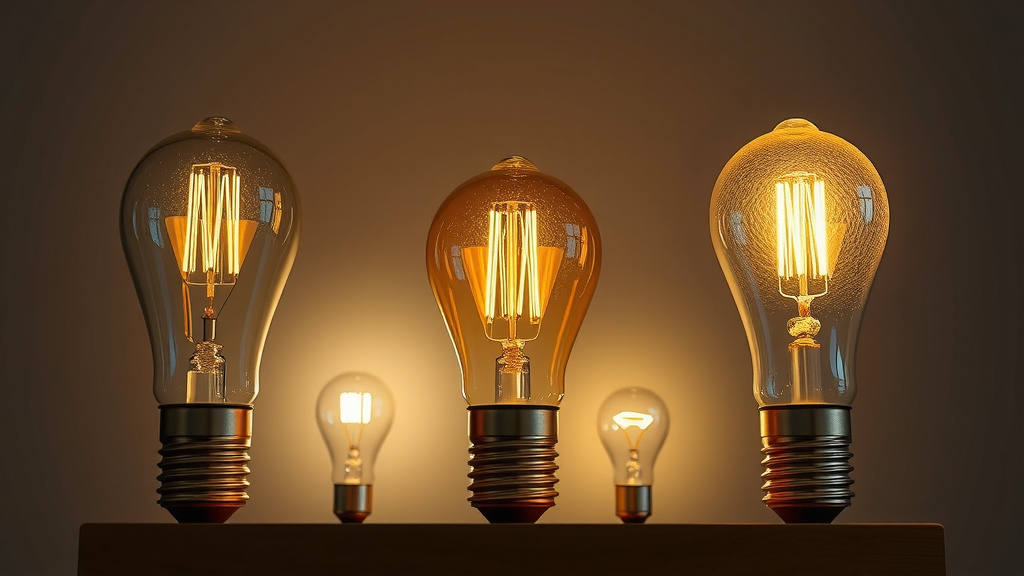
Think of a traditional light bulb. Inside, there’s a thin wire, the filament, usually made of tungsten. When you flip the switch, electricity heats this filament until it glows. This is how it produces light. It’s a simple, old-school technology that’s been around for over a century. They create a very warm, soft light that many people find cozy and nostalgic. However, this glowing filament gets incredibly hot, and it doesn’t last very long. It’s like a tiny, hot wire working hard for a short time.
What is an LED Bulb?
LED stands for Light Emitting Diode. This is a much more modern technology. Instead of a glowing wire, LEDs use tiny semiconductors that emit light when an electric current passes through them. They don’t get as hot as filament bulbs, making them much safer and more energy-efficient. They are like a small, efficient engine that converts electricity into light with very little waste. This efficiency is a big reason why they’ve become so popular.
Comparing Performance and Longevity
Energy Efficiency: The Big Money Saver
This is where LEDs really shine. Filament bulbs are notoriously energy-inefficient. A large percentage of the electricity they use is converted into heat, not light. Research shows that LEDs use up to 80% less energy than incandescent bulbs to produce the same amount of light (Energy.gov). Imagine your electricity bill shrinking just by switching out your bulbs! For example, a typical 60-watt incandescent bulb might be replaced by an LED bulb using only about 9-10 watts. That’s a massive difference over time.
Lifespan: How Long Will They Last?
If you’re tired of constantly changing light bulbs, LEDs are your answer. Filament bulbs have a very short lifespan, often lasting only about 1,000 hours. LEDs, on the other hand, can last much, much longer. We found that LEDs typically last between 15,000 and 25,000 hours, and sometimes even more. That means an LED bulb could last you 15 to 25 times longer than a filament bulb. Think about how many times you’d have to buy and replace a filament bulb over the lifespan of a single LED. The savings in both money and hassle are substantial.
Durability: Built to Last
Filament bulbs are surprisingly fragile. The glass bulb and the delicate filament inside can break easily. Dropping one can mean it’s game over. LEDs are much more robust. They usually have a plastic casing instead of glass, and there are no delicate filaments to worry about. They can often withstand vibrations and impacts better than their older counterparts. This makes them a safer choice for areas where bulbs might get bumped or jostled.
Light Quality and Aesthetic Appeal
The “Warm Glow” Debate
Many people love the warm, inviting light that filament bulbs produce. It has a certain ambiance that many find hard to replicate. This is often referred to as “warm white” light. For a long time, early LEDs struggled to match this aesthetic. They sometimes produced a harsh, bluish light. However, LED technology has come a long way. You can now find LEDs specifically designed to mimic that cozy, warm glow. They come in various color temperatures, measured in Kelvin (K). A lower Kelvin number, like 2700K, is similar to the warm glow of a filament bulb.
Color Rendering Index (CRI)
This is a measure of how accurately a light source reveals the true colors of objects. A higher CRI means colors look more natural. Traditional filament bulbs generally have a high CRI, often close to 100. This is why colors look so vibrant under them. Many modern LEDs also boast high CRI ratings, comparable to filament bulbs. So, you don’t have to sacrifice color accuracy for energy savings.
Cost Considerations: Upfront vs. Long-Term
Initial Purchase Price
When you walk into a store, you’ll likely notice that filament bulbs are usually cheaper to buy upfront than LED bulbs. This lower initial cost can be tempting. However, it’s important to look beyond the sticker price.
Total Cost of Ownership
While the initial cost of an LED might be higher, the long-term savings quickly make up for it. Think about the electricity saved over thousands of hours and the money not spent on replacement bulbs. Studies consistently show that the total cost of owning an LED bulb over its lifetime is significantly lower than that of a filament bulb. This makes LEDs a much smarter financial investment for your home.
| Feature | Filament Bulb | LED Bulb |
|---|---|---|
| Energy Efficiency | Low (uses much more electricity) | High (uses up to 80% less energy) |
| Lifespan | Short (approx. 1,000 hours) | Very Long (15,000-25,000+ hours) |
| Durability | Fragile (glass, delicate filament) | Durable (often plastic, solid-state) |
| Heat Production | High (gets very hot) | Low (runs much cooler) |
| Initial Cost | Lower | Higher |
| Long-Term Cost | Higher (due to energy & replacements) | Lower (due to energy savings & longevity) |
Making Your Decision: A Quick Checklist
To help you decide, consider these points:
- Do you want to save money on your electricity bill?
- Are you tired of frequently replacing burnt-out bulbs?
- Is durability a concern for your lighting locations?
- Do you want a light bulb that lasts for many years?
- Are you looking for a long-term, cost-effective solution?
- Do you want to reduce your carbon footprint?
If you answered “yes” to most of these questions, then an LED is likely the better choice for you. While filament bulbs offer a classic look, the practical benefits of LEDs are hard to ignore. They are the clear winner for most modern homes looking for efficiency, longevity, and savings.
Conclusion
You’ve learned that while filament bulbs offer a nostalgic charm, LEDs are the clear winner for your home lighting. They provide substantial savings on your electricity bills and last incredibly long, meaning fewer replacements and less hassle. Modern LEDs also give you the flexibility to choose the perfect warm ambiance you love, without the energy waste and fragility of old-fashioned bulbs. Make the switch to LEDs to enjoy brighter savings, a longer-lasting glow, and a more durable lighting solution for years to come.
Frequently Asked Questions
Can I get LEDs that look like traditional filament bulbs?
Yes, you absolutely can! Many LED bulbs are designed with visible filaments made of LED material to replicate the classic look. You can find them in various shapes and sizes, offering that vintage aesthetic with all the benefits of LED technology.
Are LEDs really that much more energy-efficient?
Yes, research consistently shows LEDs are far more energy-efficient. They use up to 80% less electricity than filament bulbs to produce the same amount of light. This efficiency translates directly into lower energy bills for your household.
How much longer do LEDs actually last compared to filament bulbs?
The difference is dramatic. Filament bulbs typically last around 1,000 hours, while LEDs can last between 15,000 and 25,000 hours, or even more. This means an LED bulb could last you 15 to 25 times longer than a filament bulb.
Is the initial cost of LED bulbs worth it?
While LEDs might have a slightly higher upfront cost, the long-term savings are substantial. You’ll save money on electricity and replacement bulbs over the lifespan of the LED. This makes LEDs a much more cost-effective choice in the long run.
Are LEDs safe to use if they are more durable?
Yes, LEDs are generally considered safer. They produce much less heat than filament bulbs, reducing the risk of burns and fire hazards. Their solid-state construction also makes them less prone to breakage.
![10 Best Clip On Desk Lamp [2026]](https://bestdesklamp.com/wp-content/uploads/2026/08/10-best-clip-on-desk-lamp-2026-featured-768x432.jpg)
![10 Best Bright Lamps For Living Room [2026]](https://bestdesklamp.com/wp-content/uploads/2026/08/10-best-bright-lamps-for-living-room-2026-featured-768x432.jpg)
![10 Best Bubble Lamp [2026]](https://bestdesklamp.com/wp-content/uploads/2026/08/10-best-bubble-lamp-2026-featured-768x432.jpg)